Understanding Standing Wave Ratio (SWR) in Amateur Radio
Learn about SWR, VSWR, and ISWR, including their definitions, measurement techniques, and practical implications for antenna systems and transmission lines.

Standing Wave Ratio, or SWR, is a critical parameter for ham radio operators to understand when setting up and tuning their stations. It measures how well an antenna system, including the feedline, matches the impedance of the transceiver. A low SWR indicates efficient power transfer from the radio to the antenna, ensuring maximum signal radiation and protecting the final amplifier stage of the equipment. High SWR, conversely, means power is reflected back to the radio, potentially causing damage and reducing effective radiated power.
Many articles explain the fundamental concepts of SWR, its mathematical definitions, and its practical implications for amateur radio activity. Operators can find detailed explanations of how SWR relates to return loss and S11, especially relevant for microwave engineering and higher frequency bands like 1296 MHz. These resources help hams grasp why a good SWR reading is crucial for effective QSOs and the longevity of their transceivers, whether operating on HF or VHF/UHF bands.
-
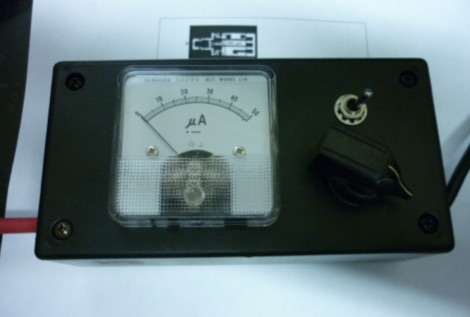 Have you been looking for an easy way to measure power or SWR at 1296 MHz? One thing is certain, it is not easy - simply because the normal range of SWR meters that most of us have is not up to 1300 MHz.
 -
 This page provides basic information about SWR (Standing Wave Ratio) and its importance for ham radio operators. It explains what SWR is, how to measure it, and why it is crucial to have a good SWR reading. The content covers the impact of SWR on antenna efficiency, power transmission, and potential interference issues. It clarifies common misconceptions like the impact of coax length on SWR. Suitable for hams looking to optimize their radio setup and avoid performance issues due to SWR issues.
 -
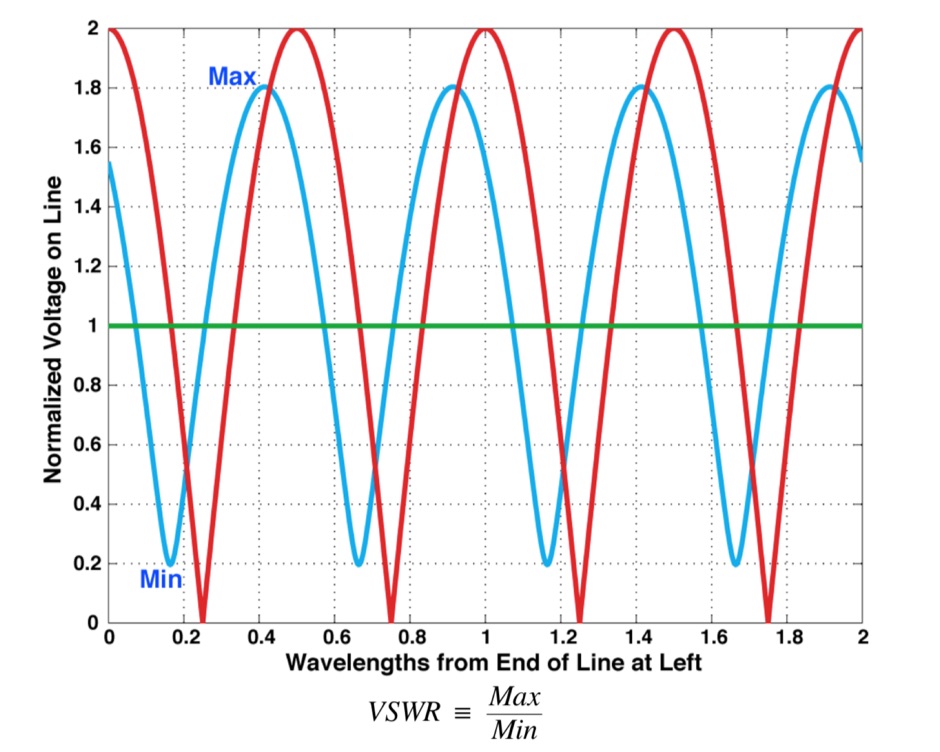 What is VSWR and why you should care, formal definition of VSWR and SeaSonde Measurements, formulas
 -
 The article explores the concepts of return loss, VSWR, and S11 within the context of microwave engineering, highlighting the confusion arising from their definitions. It clarifies that these parameters, while seemingly distinct, fundamentally describe the same phenomenon related to wave reflection and transmission in microwave circuits. The discussion emphasizes the historical context and mathematical relationships among these terms, revealing that their interpretation can vary significantly across different engineering disciplines. Ultimately, it advocates for a pragmatic approach to using these parameters based on familiarity rather than strict definitions.
 -
 This comprehensive article dispels common misconceptions about Standing Wave Ratio (SWR) in amateur radio. The author explains that SWR is not an antenna property but a measure of the entire antenna system, representing the mismatch between transmission line and load impedance. Contrary to popular belief, modest SWR values (under 3:1) typically cause minimal power loss in HF applications. The article demonstrates mathematically why obsession with achieving 1:1 SWR is often unnecessary, explains when SWR matters more (QRO, QRP, VHF/UHF), and explores effective matching techniques including proper ATU placement and quarter-wavelength transformers.
 -
 Article about Standing-wave ratio (SWR) defined as a mathematical expression of the non-uniformity of an electromagnetic field on a transmission line. SWR is the ratio of the maximum radio-frequency (RF) voltage to the minimum RF voltage along the line.