DIY Radio Programming Cables and Interface Circuits
Find schematics and instructions for building custom programming cables and interfaces for various ham radio transceivers.

Many amateur radio operators use programming cables to connect their transceivers to a computer. This allows for easy configuration of memory channels, repeater offsets, and other operational parameters, which is especially useful for radios with many features or for preparing a radio for specific events like contests or public service nets. These cables often translate between the radio's internal logic levels and standard computer serial ports, enabling software control and firmware updates.
This category provides schematics and build instructions for various radio programming interfaces. Hams can find diagrams for specific transceivers like the Icom ID-800, Yaesu FT-857, and Kenwood TM-271E, often detailing the necessary components and pinouts. There are also designs for universal programming cables that adapt to different radio models, sometimes incorporating optocouplers for electrical isolation, which protects both the radio and the computer during programming tasks.
-
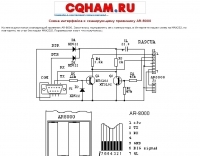 Schematic for AR-8000 programming cable
 -
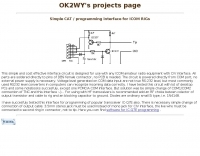 This simple and cost effective interface circuit is designed for use with any ICOM amateur radio equipment with CIV interface
 -
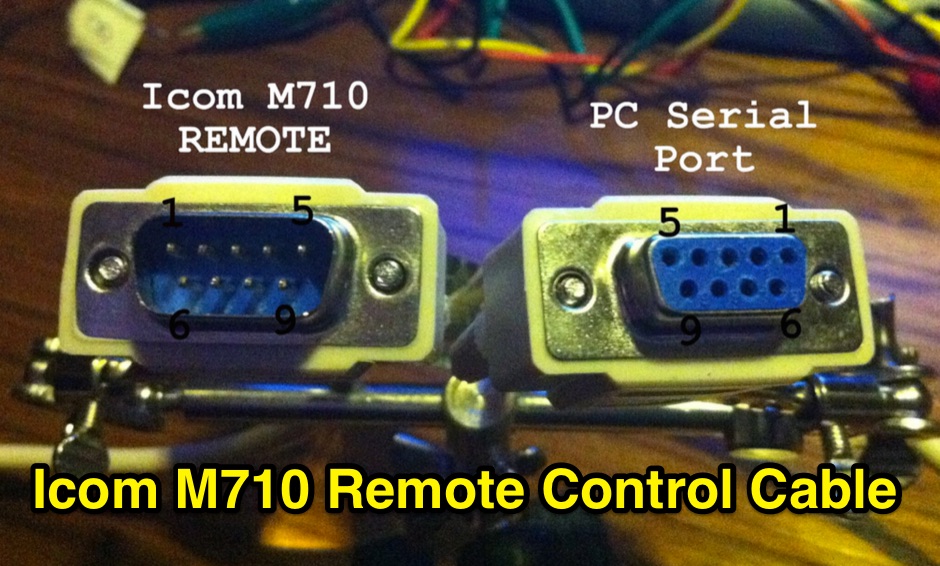 How to build and connect the M710 Remote Cable
 -
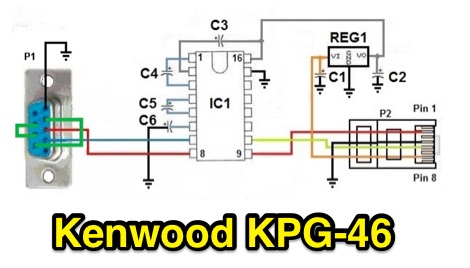 Schematic diagram for the Kenwood KPG 46 programming cable interface for Kenwood TM 271E TK 71 TK 81 TK 7302 NX 700 NX 800 series
 -
 A circuit that connects an IBM compatible personal computer, running TR Log or CT (etc.) contest logging software, and Kenwood transceivers equipped with serial control ports. CW keying is also provided in this RFI filtered interface unit.
 -
 The interface described here has been verified to work on the TH-G71 and also the the TH-F6A/TH-F7E
 -
 Build a Data Cable for the Yaesu VX-6
 -
 This article describes a generalised unit for interfacing a transceiver's TTL/CMOS interface to RS-232.
 -
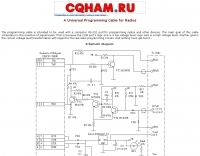 The programming cable is intended to be used with a computer RS-232 port for programming radios and other devices.
 -
 Using the FT-857 Microphone Jack for Serial Control (CAT)
 -
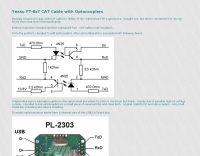 Yaesu CAT Cable for FT-817 857 897
 -
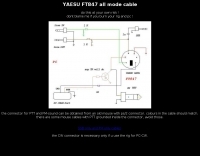 Yaesu FT 847 CAT cable
 -
 VX-7/5R Computer Interfacing by Bas Helman G4TIC
 -
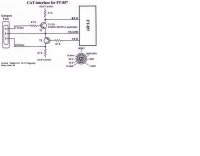 Schematic for Yaesu FT-857 CAT interface
 -
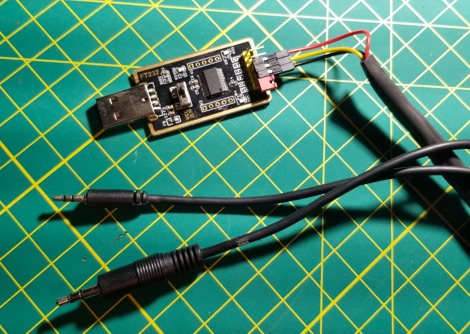 How to make a custom cable to program your baofeng or kenwood radio. Includes a video on how make a Baofeng Programming Cable for Chirp on Mac OSX
 -
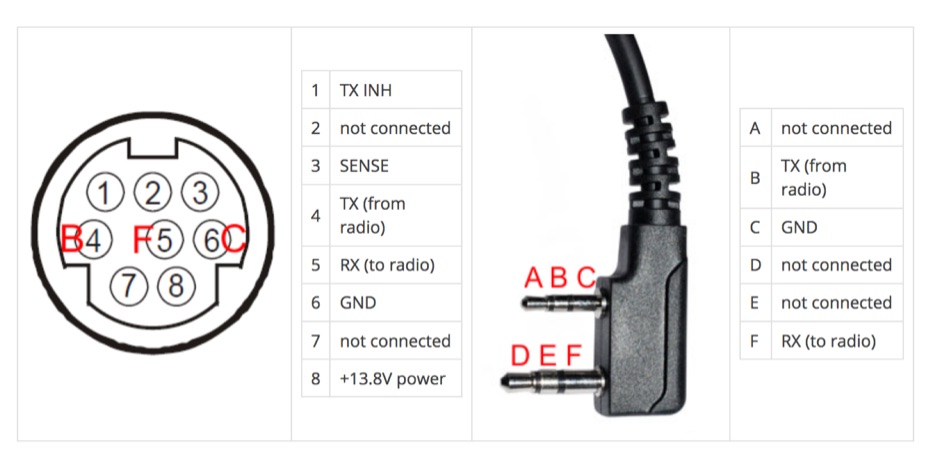 Adapting a Wouxun/Kenwood USB cable as a Yaesu FT-817 FT-857 FT-897 CAT connection