Search results
Query: soft ware
Links: 1074 | Categories: 116
Categories
- Software
- Software > Software Defined Radio
- Software > Virtual Audio Software
- Technical Reference > Software Defined Radio
- Manufacturers > Software Defined Radio
- Software > ADS-B
- Software > Aircraft scatter
- Radio Equipment > HF Amplifiers > Alpha 87A
- Software > Antenna analysis
- Technical Reference > Antenna Rotator
- Manufacturers > APRS
- Technical Reference > APRS
- Software > Audio Recorders
- Software > Audio Streaming
- Technical Reference > Beacon keyers
- Software > Beacon Monitoring
- Operating Modes > Chip64
- Software > Circuit Design
- DX Resources > Contest
- Software > Contesting
- DX Resources > County Hunting
- Software > D-STAR
- Software > Databases
- Software > Decoders
- Ham Radio > Regional > Denmark
- Operating Modes > Digital Modes
- Software > Digital Voice
- Software > DX Cluster
- Operating Modes > Internet Linking > EchoLink
- Operating Modes > EME
-
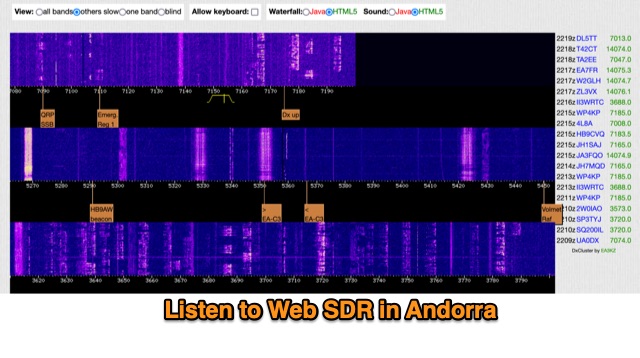 Presents a web software defined radio service hosted by the ARDAM amateur radio club in Ordino, Andorra, situated at an altitude of 1,400 meters in the Pyrenees. The system incorporates four FunCubeDonglePro+ receivers, providing access to the 60m, 40m, 20m, and 80m amateur bands. These receivers are connected to a dipole antenna oriented East/West, enabling users to monitor signals, check their own transmissions, or simply enjoy general ham radio listening from this unique QTH. The interface provides a waterfall display, frequency tuning, and signal strength plotting, with options for both Java and HTML5 WebAudio, though Java is noted as a requirement for full functionality on some browsers. The resource details the operational aspects, crediting PA3FWM for the underlying software and C31CT and EA3KZ for system operation and maintenance, ensuring 24/7 availability. It also includes a significant section outlining the ARDAM association's ongoing disputes with the URA (Unió de Radioaficionats Andorrans) regarding amateur radio regulations, CEPT licensing for foreign visitors, and the installation of a VHF-DMR repeater, highlighting the challenges faced by ARDAM in promoting amateur radio in Andorra.
 -
 Presents various amateur radio topics through blog posts, detailing operational experiences and technical insights from the perspective of SV2YC. The content frequently discusses antenna projects, such as a **portable 20m/40m dipole** designed for rapid deployment, and explores the performance characteristics of different wire configurations in varied field conditions. Observations on propagation and band activity across the HF spectrum are also regularly documented, providing practical context for fellow operators. Specific entries often include detailed accounts of **DX contacts** and participation in minor contests, outlining station setup, power levels, and antenna choices. The blog also covers modifications to commercial transceivers and homebrew accessory construction, offering practical advice on improving station efficiency and functionality. Further posts delve into software applications for logging and digital modes, sharing configurations and operational tips for maximizing their utility in daily amateur radio activities.
 -
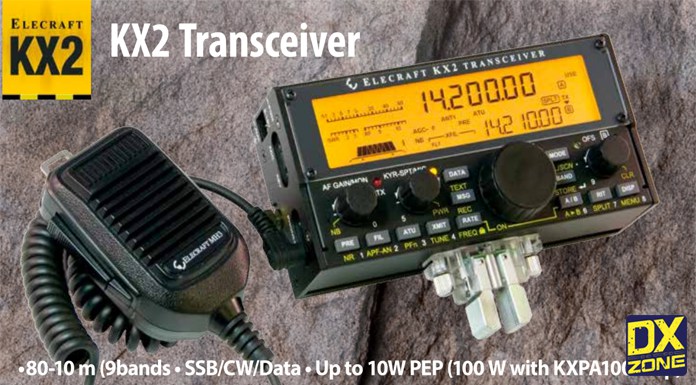 The Elecraft KX2 is presented as a highly portable QRP transceiver, covering 80-10 meters with SSB, CW, and data modes. Key specifications include its remarkably light weight of only **13 ounces** (0.3 kg), an optional internal 2.6 Ah Li-ion battery, and an internal wide-range automatic antenna tuner (ATU). This _software-defined radio_ (SDR) architecture incorporates advanced DSP features such as dual watch, noise reduction, noise blanking, and autonotch, alongside built-in PSK31/RTTY data mode operation without requiring an external PC. Designed for maximum portability, the KX2 measures 5.8 x 2.8 x 1.5 inches and delivers up to **10 watts** of output power. Its low current drain of 135 mA allows for up to 8 hours of typical operation on a single battery charge, making it suitable for field deployment. The transceiver also features a built-in microphone for HT-style use and is compatible with the KXPA100 amplifier, offering versatility for various operating scenarios from desktop to mobile or handheld.
 -
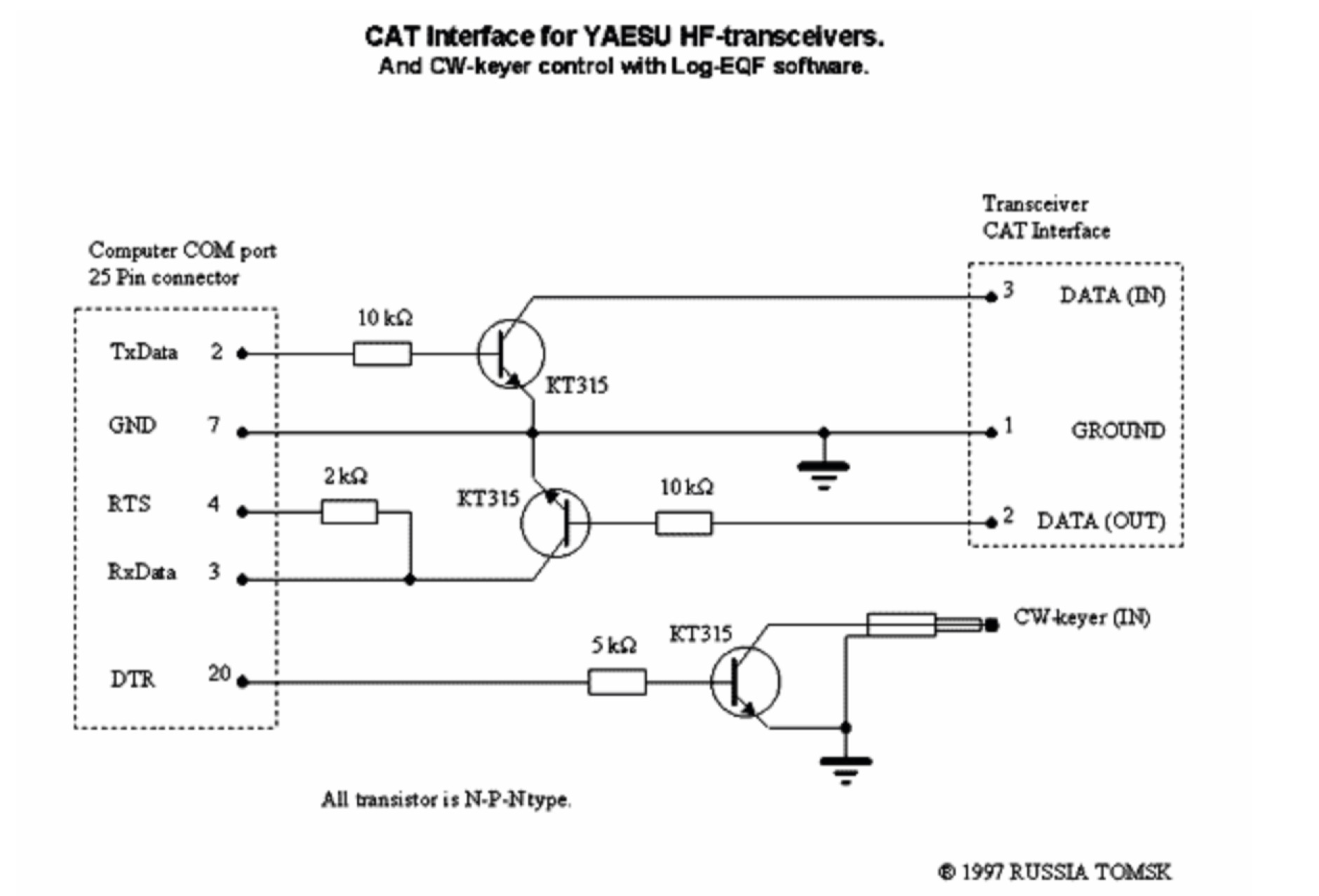 Schematic diagram circuit to build a RS232 serial interface for the Yaesu FT 1000D, works also as CW Keyer control with Log-EQF software. May be used with other Yaesu HF Transceivers.
 -
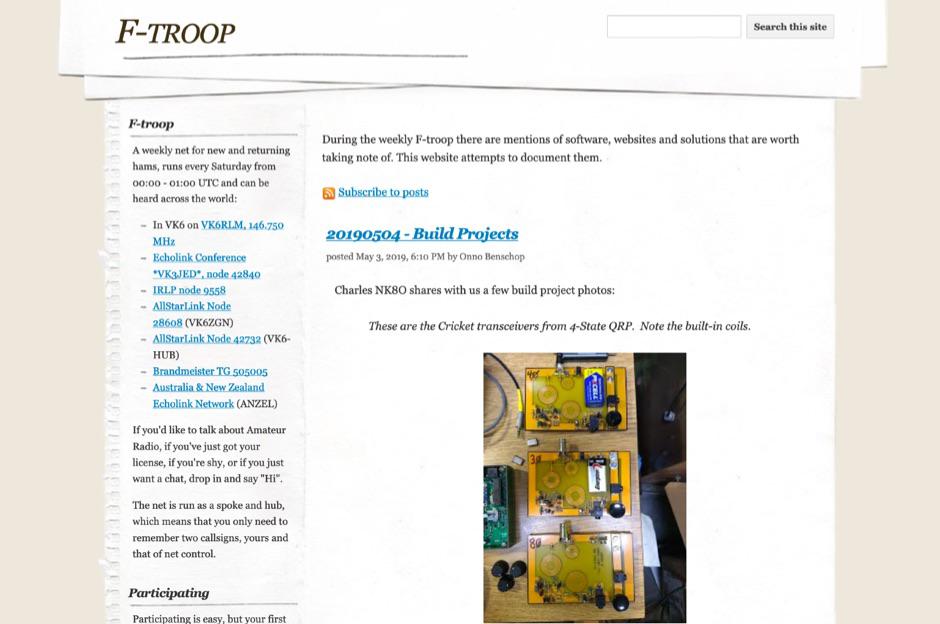 A weekly net for new and returning hams, runs every Saturday from 00:00 - 01:00 UTC and can be heard across the world. During the weekly F-troop there are mentions of software, websites and solutions that are worth taking note of. This website attempts to document them.
 -
 Experimental Methods in DSP design. The author explains how a software defined radio works to help other amateurs with their learning. This set of tutorials takes you from how to write a single component to a fully working SDR.
 -
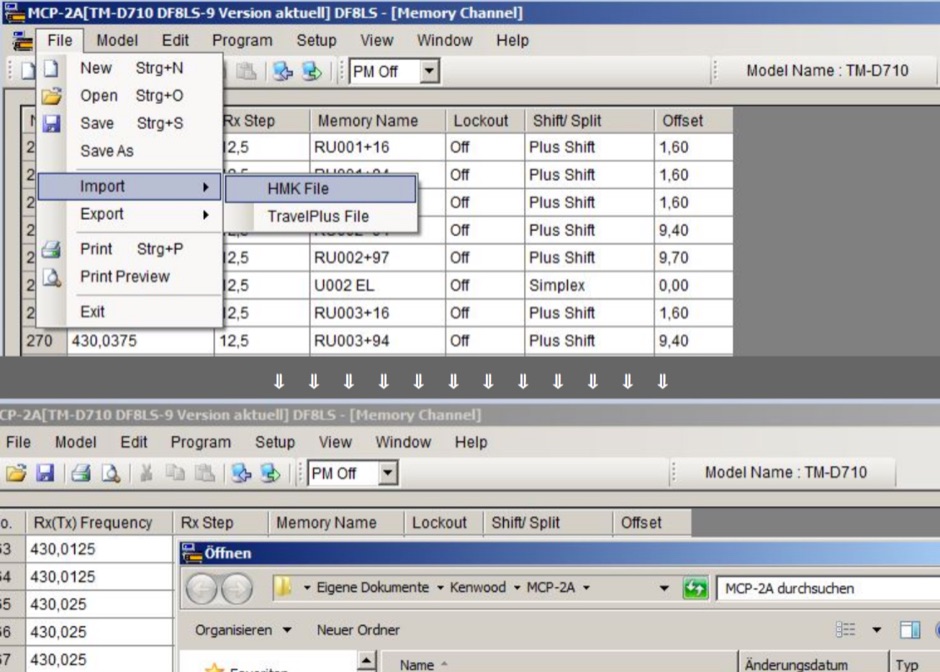 All available frequencies & offsets configurations for repeaters can be downloaded as database for Kenwood MCP-2A memory channel programming software for TM-D710 & TM-V71. Zip file is no more available from the author, but the full table of frequencies is still online
 -
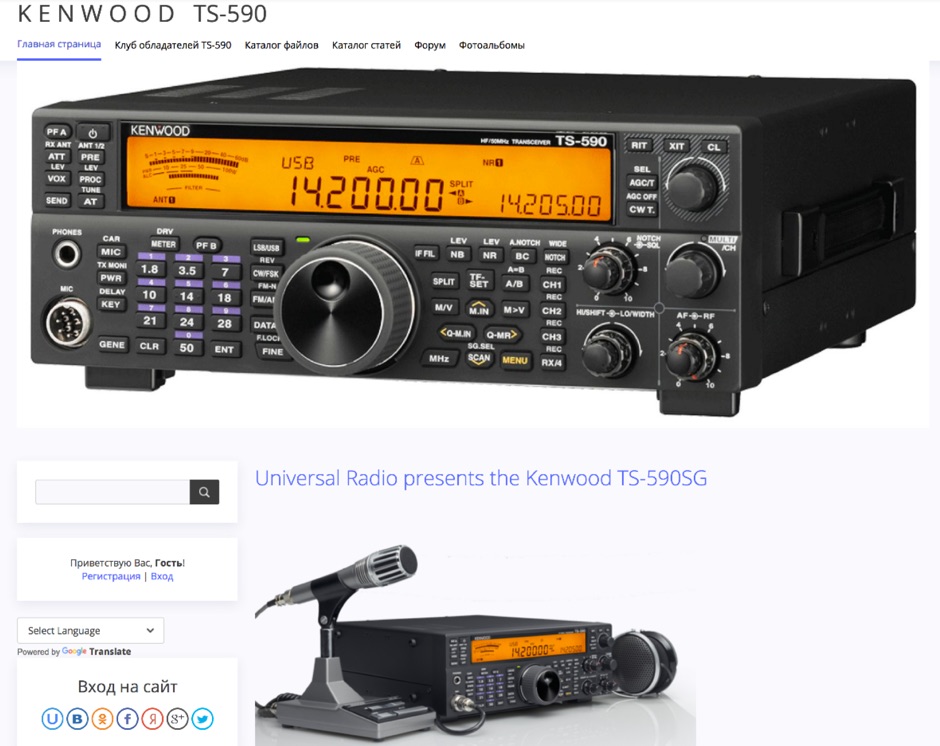 A web site deticated to the Kenwood TS-590 transceiver with links to software downloads fot the 590s seriend and technical documentation in Russian.
 -
 This article describes a simple yet effective multi-band vertical HF antenna design that performs exceptionally well across 80m to 10m bands. The antenna consists of a 13.4m wire mounted on a 12.4m Spiderpole, complemented by four 12m radials and a ground rod. Initially tuned with a manual LC circuit, it was later upgraded with a CG3000 remote auto ATU for convenient band switching. Despite antenna modeling software suggesting limited performance on higher frequencies, the system demonstrated excellent DX capabilities across all bands, outperforming more complex vertical antenna designs.
 -
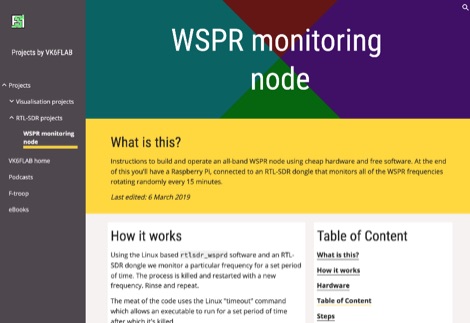 The goal of this interesting project is to monitor a particular set of frequencies for a set period of time. In this article your will find instructions to build and operate an all-band WSPR node using cheap hardware and free software. At the end of this you'll have a Raspberry Pi, connected to an RTL-SDR dongle that monitors all of the WSPR frequencies rotating randomly every 15 minutes.
 -
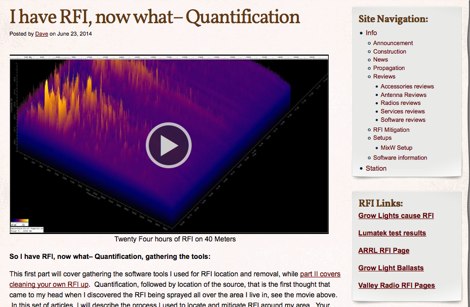 This article will cover gathering some software tools used for RFI location and removal.
 -
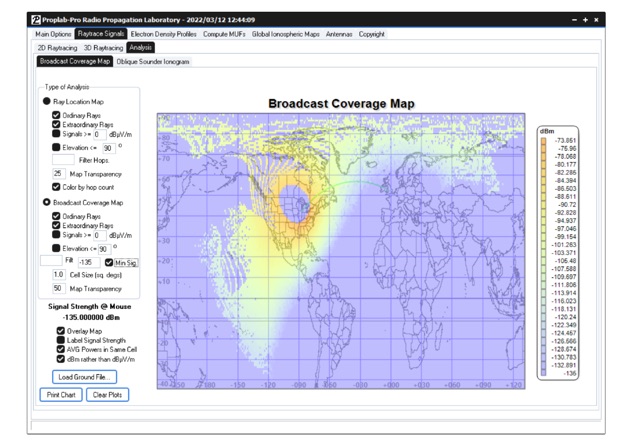 Ray-trace radio signals through a realistic three-dimensional ionosphere using Proplab-Pro. This software has been used by the military, researchers, universities and amateur radio operators around the world to assist in determining radio propagation conditions and radio signal behavior. It is one of the most respected and well established software packages for radio engineers and enthusiasts, being actively updated for over 28 years.
 -
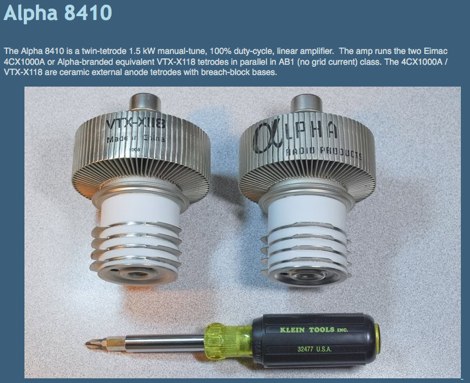 Alpha 8410 power amplifier software monitor anc control functionalities description by AE9K
 -
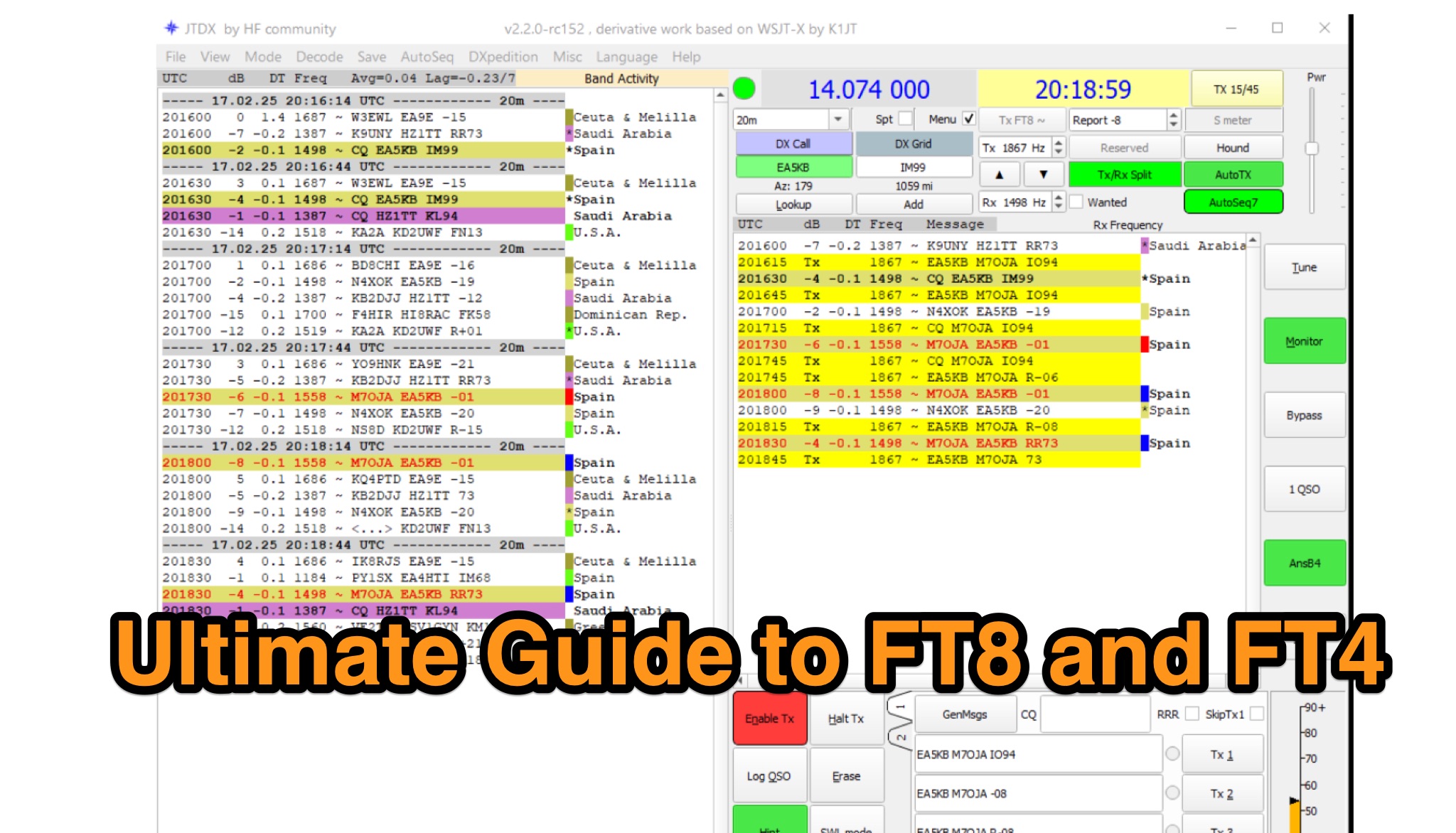 Learn all about FT8 and FT4 digital modes in ham radio. Discover how to configure software to use these powerful modes for making contacts even in poor conditions. Find out how to hunt for awards and view instant statistics of your transmissions. Explore the benefits of using digital modes such as FT8 and FT4 for enhancing your ham radio experience.
 -
 The Covey Hill Amateur Radio Club operates a 146.685 MHz analog repeater with an 88.5 Hz PL tone, alongside several digital repeaters. The resource details specific frequencies and modes for D-STAR (145.590 MHz, 1266.300 MHz voice, 1297.675 MHz data on 23 cm), DMR-Marc (448.525 MHz), DMR-Brandmeister (441.750 MHz), Yaesu Fusion (449.725 MHz), and P-25 Digital (147.315 MHz). It also lists Echolink node 595040 (VE2REX-R) as an access point for the club's network. A recent update, dated June 19, 2024, announces the VE2REX analog repeater and Echolink are fully functional again, after resolving issues including a conflicting 100.0 Hz tone, software repairs for Allstar and Echolink, a suspected defective USB port on the Mini PC, and a faulty exciter in the Motorola Quantar repeater. Guy, VE2VMT, was instrumental in troubleshooting these problems. The club, established in 1994, provides a calendar, news, links, and membership information, with Linda Cullen, VE2NJK, serving as president and VA2DBJ as webmaster.
 -
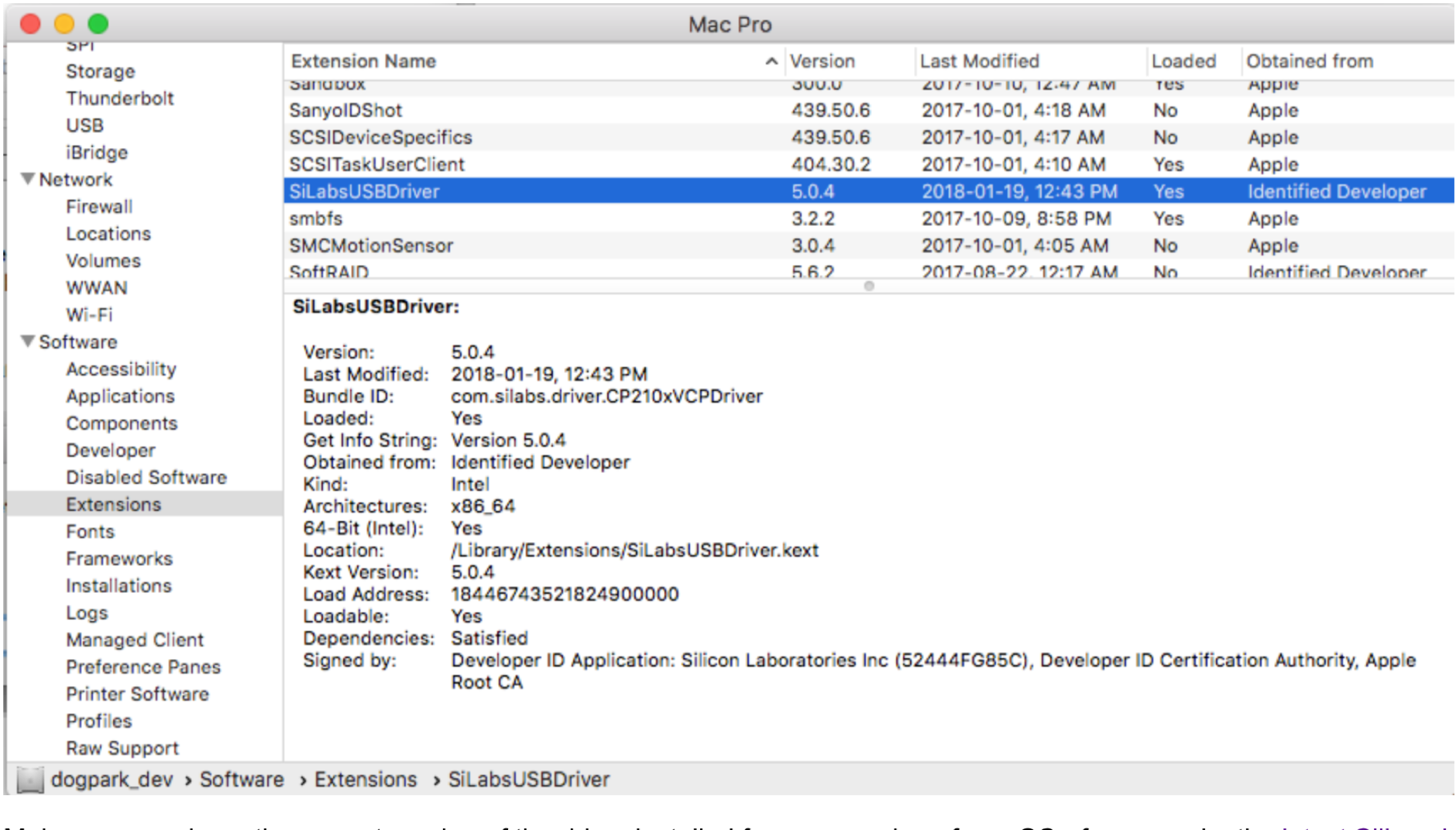 How to connect an Apple MacOS to a USB Radio transceiver. Get a Mac driver for ICOM IC-7100, IC-7200, IC-7300, IC-7600, IC-7610, IC-7850, IC-9100, PCR2500, Kenwood TS-890S, TS-990S, TS-590S, Elecraft KX3, K3S, Yaesu FTdx3000, FT-891, FT-991 or Ten-Tec Eagle USB direct connect built in USB/Serial adapter.
 -
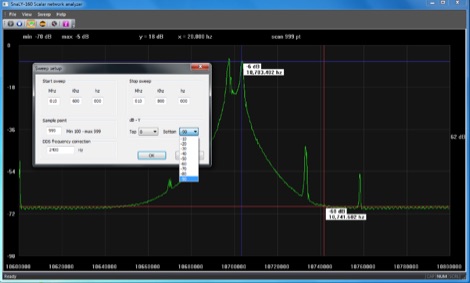 A project by LY3H of a complete Scalar USB network analyzer with freeware windows software, sweep range 100 kHz to 160 MHz, powered by USB.
 -
 Decoding 433MHz-transmissions with software-defined radio.
 -
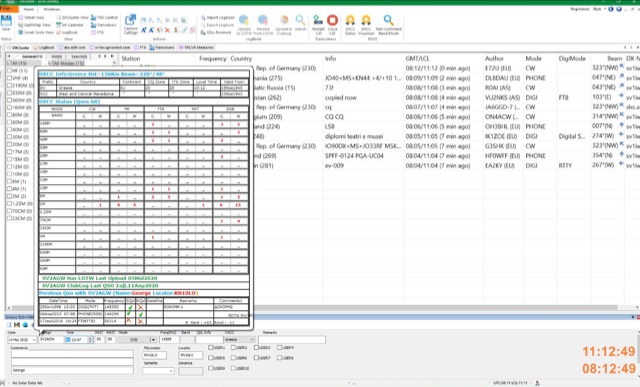 DxDozer is a Windows-based amateur radio logbook designed for both new and experienced DXers, featuring a robust logging system with extensive search capabilities. It offers seamless integration with FT8, displaying received stations from WSJT-X in a DX Cluster-like view, indicating LoTW status and prior contacts, and initiating QSOs directly. The software supports an unlimited number of callsign logbooks and allows multiple operators to log simultaneously to a single database, enhancing its utility for multi-operator stations or contest operations. The application includes a sophisticated DX Cluster with highly configurable filters based on band, mode, continent, worked/confirmed status, and LoTW participation, enabling users to monitor specific calls or countries. DxDozer simplifies QSL management by facilitating one-button uploads to LoTW and ClubLog, and downloads of new confirmed QSOs, with a dedicated field for QSL medium. The software provides both 'Easy' and 'Expert' modes to cater to different user proficiency levels, and is available via a yearly subscription after an initial free trial period.
 -
 Around 17% of the U.S. population experiences some degree of Dyslexia, a condition affecting language processing that can hinder amateur radio license candidates, often leading to repeated exam failures despite diligent study. This resource outlines methods for Volunteer Examiners (VEs) and Elmers to identify and assist candidates with cognitive disorders like Dyslexia and **ADHD**, which affects approximately 4% of U.S. adults. It emphasizes recognizing patterns in missed answers, such as spatial placement errors on answer sheets, and suggests reading questions aloud as an accommodation. The author, NC4FB, shares a structured approach developed over three years, involving extensive candidate interviews and a self-study program. This program utilizes specialized software with keyword highlighting and a unique font to improve comprehension for Dyslexic/ADHD candidates. It also incorporates **MP3 audio files** for subelement questions and correct answers, providing an alternative study method for those who benefit from auditory learning. Key elements of the support strategy include repetition, positive reinforcement, and timely progress updates, often visualized with a color-coded table tracking scores of 85 or higher. The goal is for candidates to pass three consecutive sample exams with at least 85% before attempting the actual license exam, demonstrating mastery of the material.
 -
 UHSDR stands for UniversalHamSoftwareDefinedRadio. The project provides the firmware to run standalone HAM transceivers. It currently supports STM32F4 and STM32F7 MCU based QSD designs.
 -
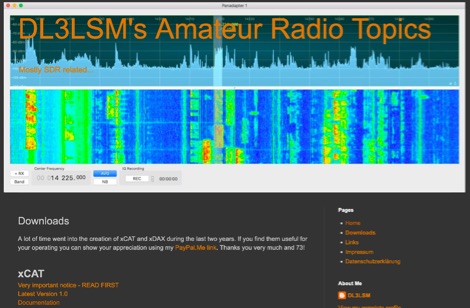 xCAT is an helper application for the FlexRadio 6000 series running on macOS computers to control via CAT protocol tranceivers, while xDAX purpose is to provide a way for Digital Mode Software like Fldigi, WSJT-X to access the digital audio data (DAX) of the FlexRadioTM
 -
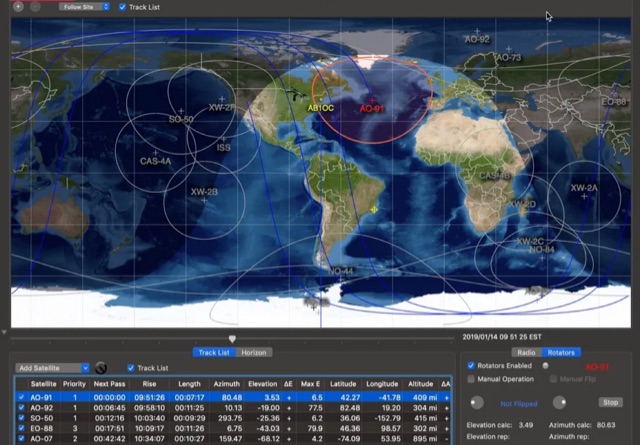 This article provides a step-by-step guide for assembling a Raspberry Pi-based Satellite Tracker Interface, designed to work with Green Heron Engineering's RT-21 controllers and MacDoppler software. The guide covers hardware assembly, SD card image installation, and system configuration for satellite tracking.
 -
 The Ontario QSO Party (OQP), an annual event, takes place on the third full weekend of April, specifically from 1800Z April 18 to 0300Z April 19, 2026, and 1200Z to 2000Z April 19, 2026. This **QSO party** encourages stations outside Ontario to contact as many Ontario amateur radio stations as possible, while Ontario stations work both in-province and worldwide. Key rule changes for 2026 include phone QSOs now counting equally with **CW** QSOs (2 points), the introduction of VE3RHQ as a bonus station, a 250m county line proximity definition, and a new Fixed County Line Category, alongside an adjustment of contest times. Established in 1998 by Bob Chandler VE3SRE, the OQP has been managed by Contest Club Ontario (CCO) since 2006. The event contributes to the State QSO Party Challenge, offering various award categories and maintaining records of past performance. Participants can submit activation plans, review Ontario multipliers, and access county maps. Final results and certificate winners are published, and a dedicated groups.io discussion group facilitates community interaction and support for logging software.
 -
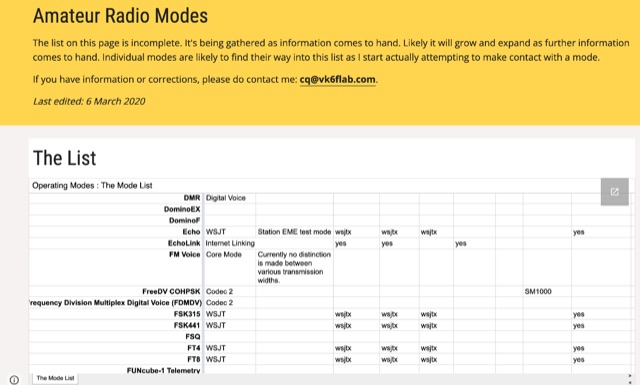 A table that summarize all known amateur radio emission modes, with reference to software and platform available for digital modes
 -
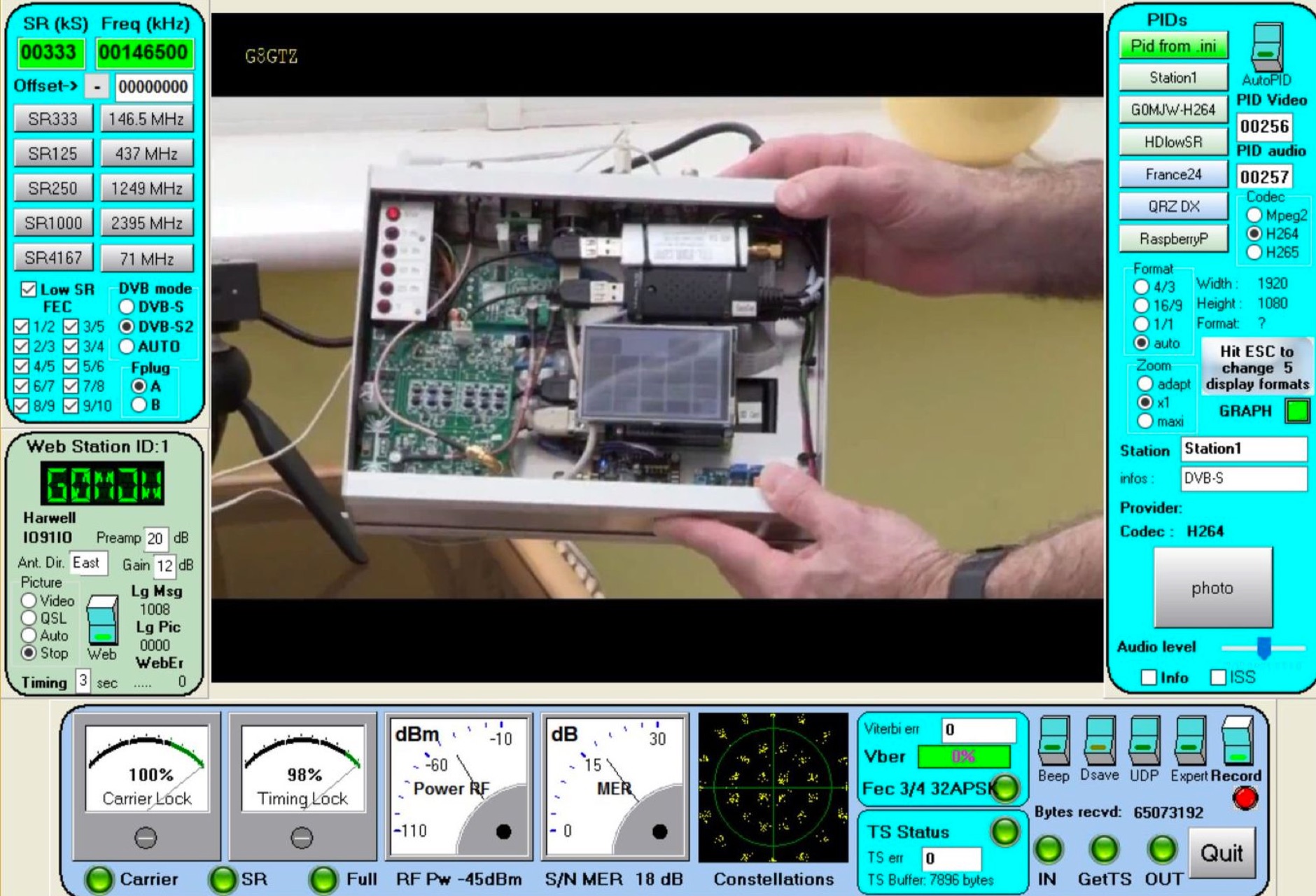 The MiniTioune receiver project, developed by Jean-Pierre F6DZP, consists of the home constructed MiniTiouner hardware which interfaces via a standard USB 2.0 port to a Windows PC running the MiniTioune software. It can be used to receive satellite broadcasts transmissions making it ideal for use on Q-oscar 100 Es hail-2 without any external frequency converters.
 -
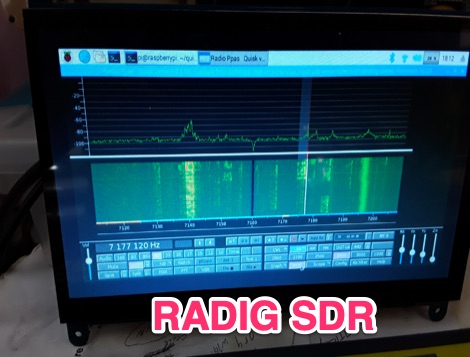 A new SDR radio concept developed by N6QW as an experimental 5W SDR transceiver for the 40 meter bands. Radio and Rig (RADIG) is a term conied by the author.
 -
 The _RS Group_ (formerly Distrelec) provides a comprehensive online store for electronic components, catering to both industrial and amateur radio needs. This resource offers a wide array of parts, including semiconductors, capacitors, resistors, relays, sensors, and power supplies, essential for constructing and maintaining amateur radio equipment. The platform emphasizes efficient procurement and features various top-level categories for easy navigation, such as **Sensors** with 33 subcategories and **Relays** with 13 subcategories, supporting diverse project requirements. Beyond component sales, RS Group offers services like ISO- and DAkkS-certified calibration for over a thousand measuring devices, and e-procurement solutions for businesses. The site also promotes _DesignSpark_, a community and software suite for electronic designers, aiding in the realization of design ideas. This integration aims to provide enhanced local support and a broader product selection, facilitating everything from basic circuit builds to complex industrial automation projects.
 -
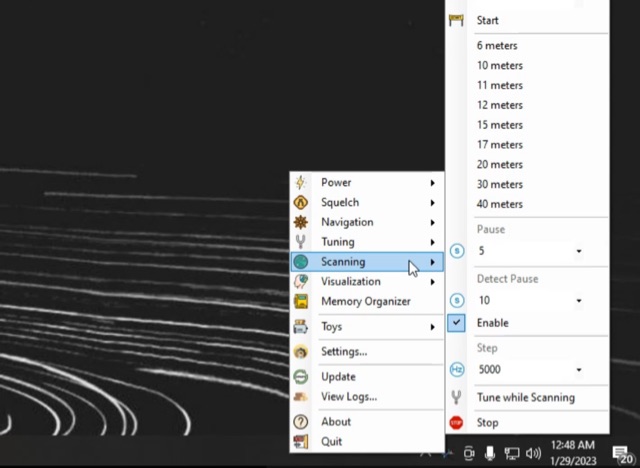 Hambook is a modern general-purpose CAT-control software package for HAM radios targeting the Windows platform.
 -
 This page by Keith Greiner describes a magnetic loop antenna project, providing step-by-step instructions to create two versions of a system with one large loop and one small loop. It includes details on how to construct the loops using different materials, along with the necessary equipment like antenna analyzers, tuners, and software. The page is divided into five sections covering project discussion, design summary, an improved small loop, construction steps, and radiation pattern analysis. Aimed at hams interested in building their own magnetic loop antennas, the page offers practical guidance and insights into impedance matching for improved performance.
 -
 First released in 1988, _SWLog_ is a comprehensive suite of applications providing logging and remote control for both amateur radio and shortwave, utility, and broadcast listening. It integrates program schedules from sources like _HFCC_, _ILGRadio_, and _EiBi_ for broadcast reception, while also linking with amateur radio logbooks such as _ClubLog_, _eQSL_, _QRZ_, and _LoTW_. The software supports radio control for various transceivers, including _Flex_, Icom, Yaesu, and Kenwood, alongside interfaces like _FLRig_, _OmniRig_, and _HamLib_. Mobile applications for Android and iOS facilitate on-the-go logging and remote control, seamlessly transferring logs without manual ADIF export. _SWLog_ leverages an enterprise-grade relational database (SQL Server) for robust data management and analytics, enabling features like mapping QSOs by band or state. It offers specific integrations for _POTA_ monitoring, displaying active spots with real-time propagation and automatic radio tuning. The application's scalability allows multiple users to log to a centralized database, suitable for Field Day or DXpeditions. The user interface features modern aesthetics with light, dark, and gray themes, the latter optimized for outdoor visibility during activities like _POTA_ or _SOTA_. The Plus Edition, available for an annual fee, expands capabilities with advanced QSL integration, additional map providers, and enhanced propagation calculations using _VOACAP_.
 -
 OneSDR is an Education website with articles that simplify Software-defined Radio. Our goal is to demystify RF technology
 -
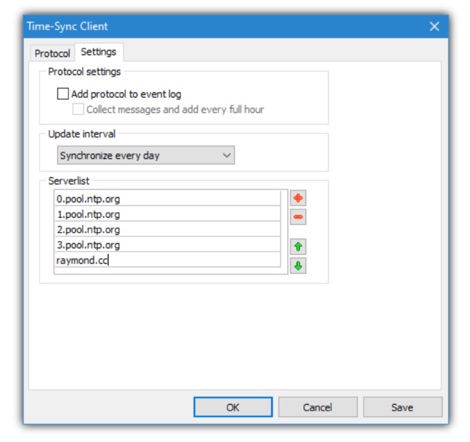 Time-Sync is a freeware software to synchronize the time of your system. Time-Sync is installed as a service, the configuration is very easy for each user and can be done in a few steps. Up to five redundant time servers can be configured.
 -
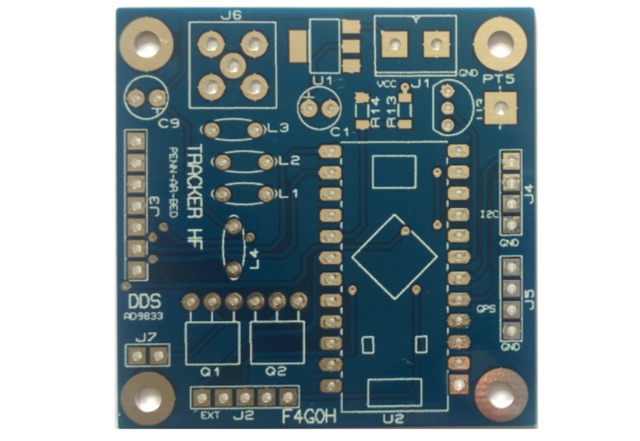 The PCB can produce a High Frequency RF signal in the range of 1MHz to 12.5MHz using an AD9833 Direct Digital Sequence (DDS) frequency synthesizer. The signal can be modulated with different Weak Signal modes such as WSPR, JT9 and JT65 using our Arduino 5V/16MHz Pro Micro software.
 -
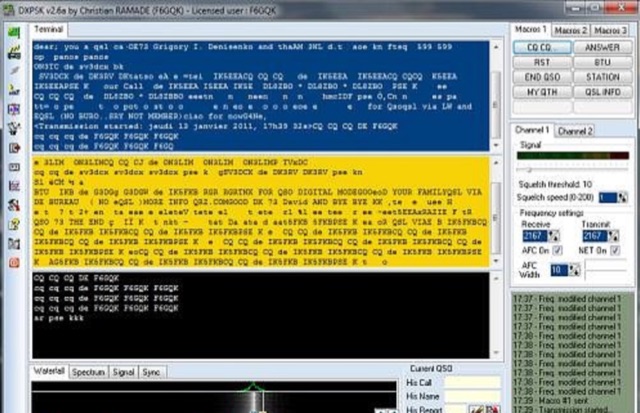 DXPSK and SMARTPSK are freeware Windows PSK31 software tools capable to send and recive even multiple tracks of PSK31 signals. SMARTPSK is the improved version of DXPSK capable to display up to 25 tracks.
 -
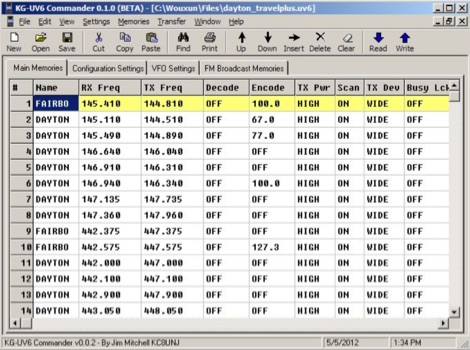 Free programming software for the Wouxun KG-UV6D and KG-UV6X.
 -
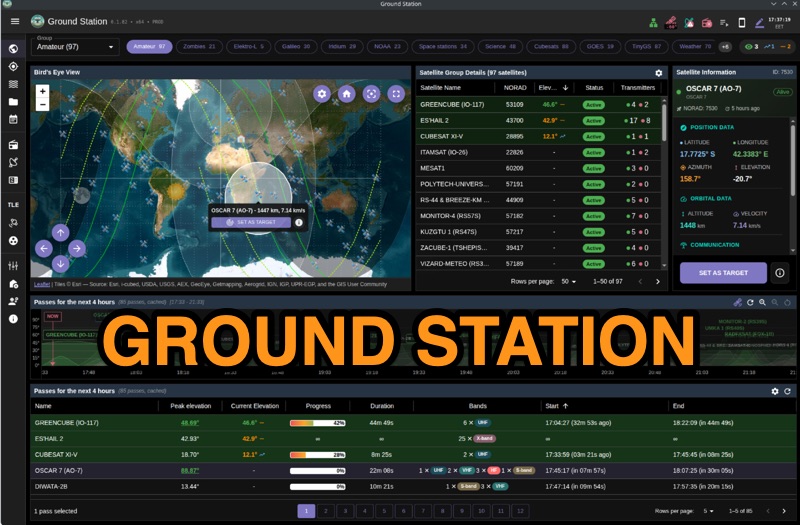 Ground Station offers real-time satellite tracking and radio communication capabilities, primarily for amateur radio operators engaged in satellite operations. It utilizes **TLE data** from sources like CelesTrak and SatNOGS for precise orbital prediction and integrates with various SDR devices, including RTL-SDR, SoapySDR, and UHD/USRP radios, to receive live signals. The software provides automated antenna rotator control and **Hamlib-compatible** rig control with Doppler correction, crucial for maintaining signal lock on fast-moving LEO satellites. It supports IQ recording in SigMF format and decodes several digital modes such as SSTV, FSK, GFSK, GMSK, and BPSK with AX25 USP Geoscan framing. Dedicated interfaces are available for satellite tracking, SDR waterfall displays with live transcription and packet decoding, and telemetry packet viewing. Users can manage TLE data synchronization and SDR hardware, along with browsing decoded outputs through an integrated file browser. An observations dashboard and DSP topology view further enhance the operational experience, providing comprehensive tools for monitoring and analyzing satellite passes.
 -
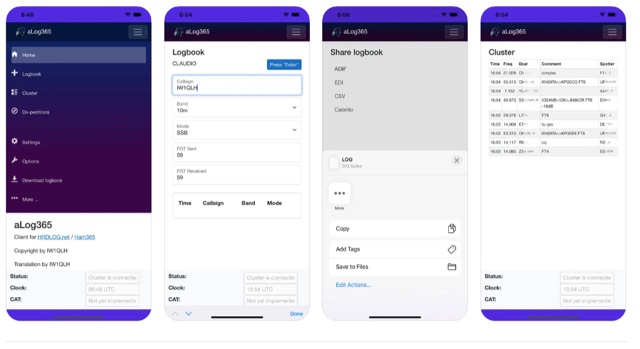 Over 500 downloads indicate _aLog365_ is a widely adopted mobile logbook for amateur radio operators, specifically designed for portable operations. It facilitates callsign lookup, real-time QSO uploads to _HRDLOG.net_ / _Ham365_, and offers CAT control via Bluetooth for radio integration. The application supports various export formats, including ADIF, EDI, CSV, and Cabrillo, ensuring compatibility with other logging software and contest submissions. Key features include an integrated DX Cluster and a DXpedition plan, providing operators with current propagation information and upcoming rare entity activations. A unique Instant QSL (iQSL) viewing capability allows for immediate confirmation of successful radio contacts. The app also supports SOTA, POTA, and WWFF operations, making it a versatile tool for activators and hunters alike. Developed by IW1QLH, the application is regularly updated, with the latest version improving performance and stability, and adding Spanish, French, and German language support.
 -
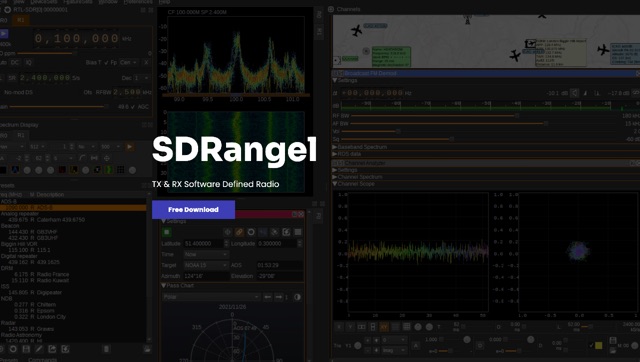 SDRangel is an Open Source Qt5 / OpenGL 3.0+ SDR and signal analyzer frontend to various hardware TX & RX Software Defined Radio. SDRangel uses sample source plugins to collect I/Q samples from a hardware device.
 -
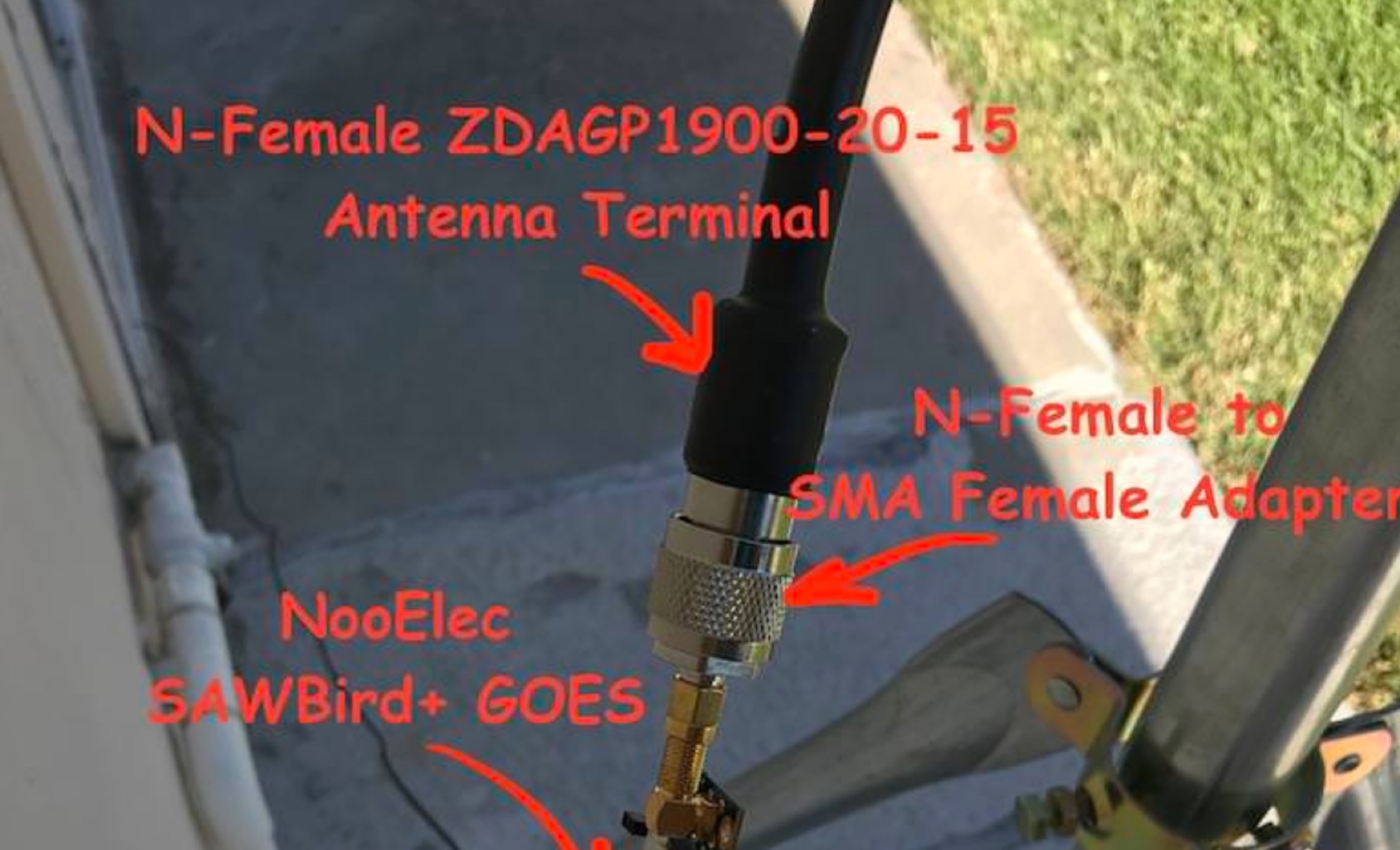 Receiving **GOES-16** and **GOES-17** weather satellite imagery requires a specific hardware and software configuration, detailed in this practical guide. The author outlines the necessary components, including a Raspberry Pi, an RTL-SDR dongle, a suitable LNA with SAW filter for 1.69 GHz, and a parabolic grid antenna. This setup enables direct reception of high-resolution weather data, a fascinating aspect of amateur radio satellite operations. The installation process begins with preparing the Raspberry Pi, followed by updating the system and installing essential dependencies like `git`, `build-essential`, and `cmake`. A critical step involves compiling and installing `librtlsdr` from source, ensuring proper driver setup and blacklisting conflicting DVB drivers. The guide then walks through testing the RTL-SDR dongle to confirm device recognition and troubleshoot common issues like USB power or driver installation problems. Finally, the instructions cover cloning and building `goestools`, a software suite essential for processing the satellite signals. This compilation, while time-consuming on a Raspberry Pi, is crucial for decoding the raw data into usable imagery. The guide concludes with the initial steps for creating the `goesrecv.conf` configuration file, preparing the system for active satellite reception.
 -
 WSJTX-Controller-v2, or Otto, functions as an assistant for the WSJT-X amateur radio program, specifically designed to enhance operational efficiency for weak signal digital modes. The software automates several key tasks, including call management, prioritizing DX stations based on user-defined criteria, and optimizing frequency selection within the WSJT-X interface. It requires a modified version of WSJT-X to function correctly, integrating directly with its core processes to provide augmented control. Otto supports various digital modes, facilitating auto-logging of contacts and generating specific alerts for desired stations or conditions. It is engineered to streamline the workflow for operators engaged in DXing and general weak signal communication, offering features like automatic CQ responses and intelligent band monitoring. The utility is not compatible with certain other amateur radio software and is explicitly noted as unsuitable for contest operations or the WSJT-X Hound mode, indicating its specialized focus on non-contest DX and casual operating. The project's GitHub repository provides the source code and documentation, allowing users to review its implementation and contribute to its development. The software's design emphasizes automation to reduce operator intervention during routine digital mode operations.
 -
 Tips and tricks on programming the Yaesu FT-991A, from software installation and connecting to the PC via the USB Port, to properly programming memories.
 -
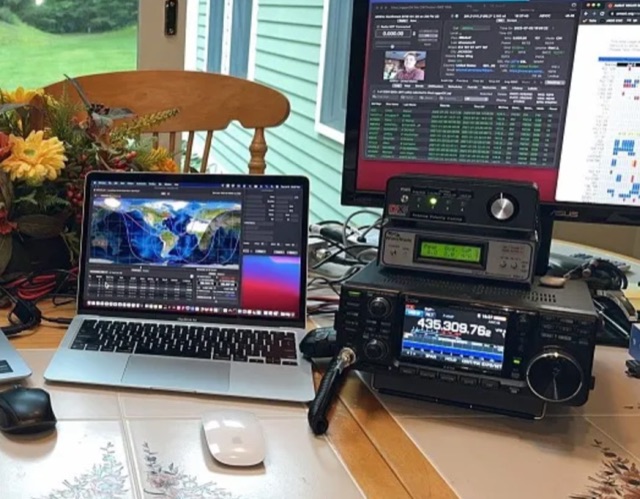 Explore the detailed setup, essential software, and operational nuances for Greencube (IO-117), a Medium Earth Orbit (MEO) satellite with a 70cm digipeater, offering DX possibilities for amateur radio enthusiasts. From antenna configurations to software choices, this guide covers everything for a successful Greencube experience.
 -
 This project focuses on testing and comparing various antennas for receiving ADS-B (Automatic Dependent Surveillance-Broadcast) signals, utilizing software tools like RTL1090 and Virtual Radar with an RTL-SDR dongle. The goal is to evaluate the reception range ("ReceiverRange") and performance of different antenna types when tracking aircraft signals, particularly around the Amersfoort area. The project includes a comprehensive photo album documenting the antenna designs and setup processes, serving as a valuable resource for enthusiasts building ADS-B reception systems
 -
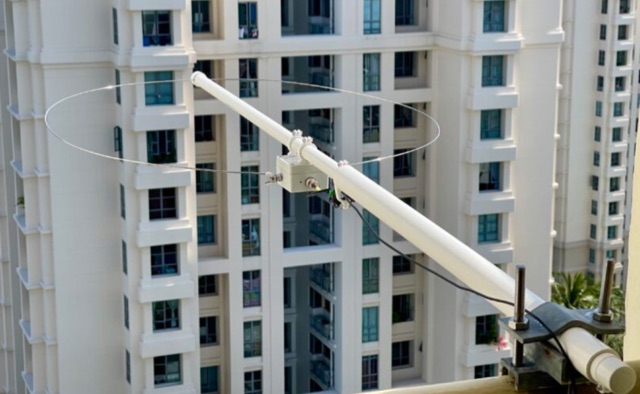 Experiences with software defined radios SDR and active antennas using the RTL SDR dongle and Spyverter HF up-converter
 -
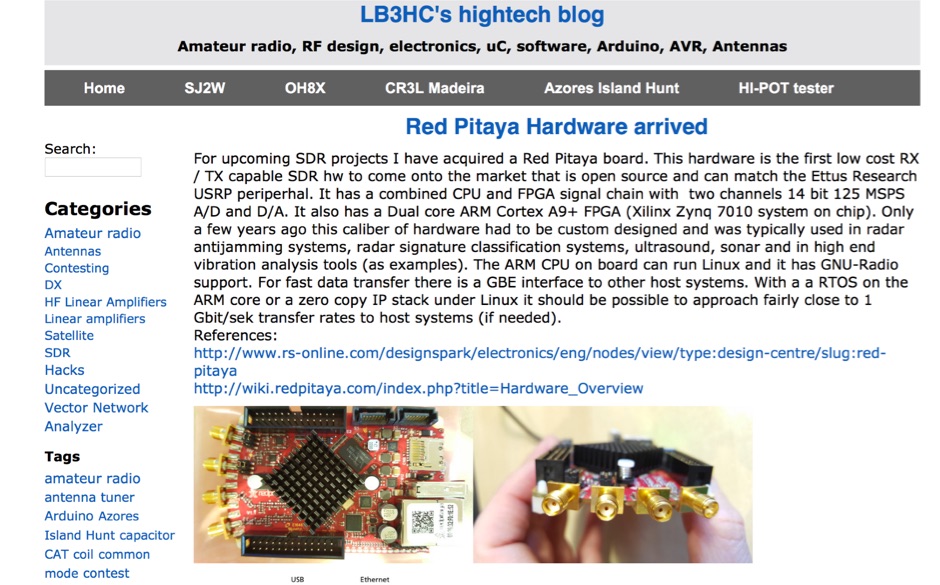 LB3HC's hightech blog - Amateur radio, RF design, electronics, uC, software, Arduino, AVR, Antennas
 -
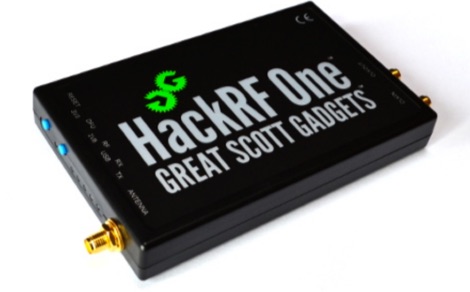 open source hardware for software-defined radio. HackRF One is an open source hardware platform that can be used as a USB peripheral or programmed for stand-alone operation. 1 MHz to 6 GHz operating frequency
 -
 Quansheng Dock v0.32.22q is a specialized software application designed for remote operation of Quansheng UV-K5 (and equivalent) handheld radios using a programming cable. The software enables various advanced functionalities and features for these radios, enhancing their usability and flexibility. Quansheng Dock is a Windows application designed for remote control of Quansheng UV-K5 handheld radios using a programming cable. It offers enhanced features such as advanced preset and channel scanning, customizable LCD displays, spectrum analysis, and audio passthrough. The software requires firmware version 0.32.21q and the .NET 6 runtime. An AIOC cable is recommended for full audio functionality. Installation is straightforward and portable.
 -
 This project revisits a minimalist software-defined radio (SDR) receiver built using a Raspberry Pi Pico, now optimized for simplicity and affordability. Designed for breadboard assembly with through-hole components, the receiver covers 0–30MHz, supporting CW, SSB, AM, and FM modes with an OLED display and spectrum scope. Key improvements include enhanced frequency accuracy, reduced op-amp saturation, and lower-cost components. Powered by three AAA batteries, it delivers standalone operation for global signal reception. Ideal for hobbyists, the design fosters experimentation and is documented with firmware and schematics available online.
 -
 This document details the construction, programming, and operation of a modular WSPR transmitter. The transmitter utilizes an ESP8266 NodeMCU, an SI5351 synthesizer with a TCXO for stability, and selectable low pass filters. Construction involves soldering headers, components, and assembling filter module. The ESP8266 is programmed via the Arduino IDE, requiring library installations and code modifications, including network credentials, callsign, and frequency . The transmitter is powered by USB or Vin terminals and its frequency is selected by jumpers and software settings. The document also covers FCC restrictions and how to use the WSPR network