Microwave Antenna Projects and Designs
Find plans and guides for building various microwave antennas, including bi-quads, dish feeds, and cavity designs for amateur radio use.

Operating on microwave bands opens up exciting possibilities for amateur radio operators, especially for DX and satellite operation. These higher frequencies, typically from 1.2 GHz and up, demand precise antenna construction and careful station setup. Hams often experiment with specialized designs to achieve the necessary gain and beamwidth for successful QSOs, whether for terrestrial contacts or challenging Earth-Moon-Earth (EME) communication.
Many operators enjoy homebrewing antennas for microwave frequencies, with projects ranging from simple Bi-Quad designs for portable use to more complex dish feeds. Resources in this category provide detailed plans for antennas like the Short-backfire antenna and Cup Dipole for the 13cm band, along with insights into cavity-backed antennas. There are also guides for optimizing dish feeds, such as the W2IMU feed horn for 10 GHz EME projects, helping hams build efficient arrays for their microwave transceivers.
-
 In this project by building a W2IMU feed horn, the author successfully optimized their 10GHz Small Dish EME project. To position and solder the components together, they used a jig and a conical section made of copper sheet. Stability was ensured by fitting the XLNA to the WG switch. The WG components were shod into a waterproof plastic container, and the feed horn and WG were surrounded by a collar and skirt that were 3D printed. With an average Moon noise of 0.5dB, the Sun and Moon noise readings were better than their previous configuration.
 -
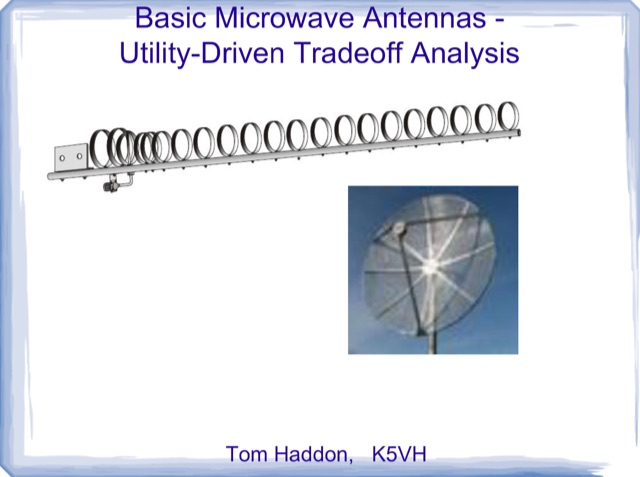 Utility-Driven Tradeoff Analysis, if you want to geto on the microwave bands , you will have to choose the proper antenna for your operating conditions. How to decide is not always easy, and you may also decide to build your own antenna.
 -
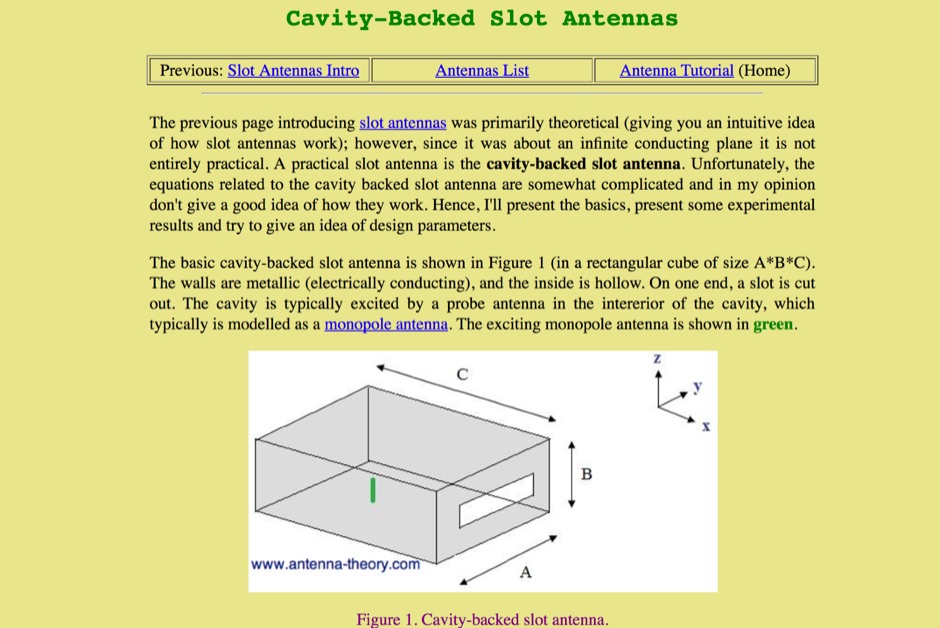 A cavity backed antenna is a practical slot antenna tipically used in microwave applications
 -
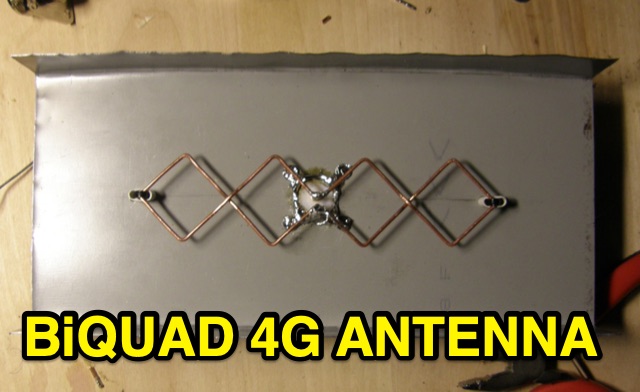 This is basic instructions for homemade 4G Antenna working on 2600 MHz UMTS featuring 13 14 dBi gain. This antenna is desigend to resonate on microwave frequencies in two segments from 2500 to 2570 MHz for Uplink, and from 2620 to 2690 MHz for Downlink.