17M Antennas: Projects for Building and Setup
Find antenna designs and construction guides specifically for the 17-meter band, including Moxon, Yagi, and multi-band options.

The 17-meter band, part of the WARC bands, offers excellent DX opportunities for operators, especially during periods of moderate solar activity. Its unique propagation characteristics often allow for stable long-distance QSOs when other HF bands are either too noisy or completely closed. Many hams enjoy building and experimenting with antennas specifically tuned for 17 meters to maximize their station's performance on this often-productive frequency.
This category provides numerous antenna projects for the 17-meter band, ranging from simple wire antennas to more complex directional arrays. Operators can find designs for compact Moxon antennas, like the N0KHQ Coax Square, which are popular for their gain and front-to-back ratio in a small footprint. There are also multi-band cubical quads and Yagi designs, such as those by DK7ZB, that cover 17 meters alongside other HF bands, allowing hams to optimize their antenna projects for specific operating goals and space constraints.
-
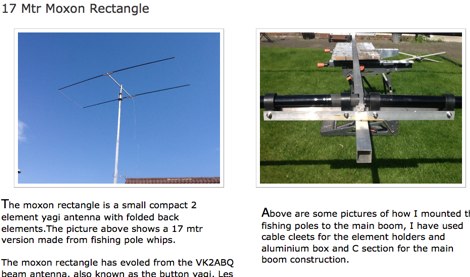 Construction details and performance analysis for a compact 17-meter Moxon rectangle antenna, including gain comparisons and build instructions.
 -
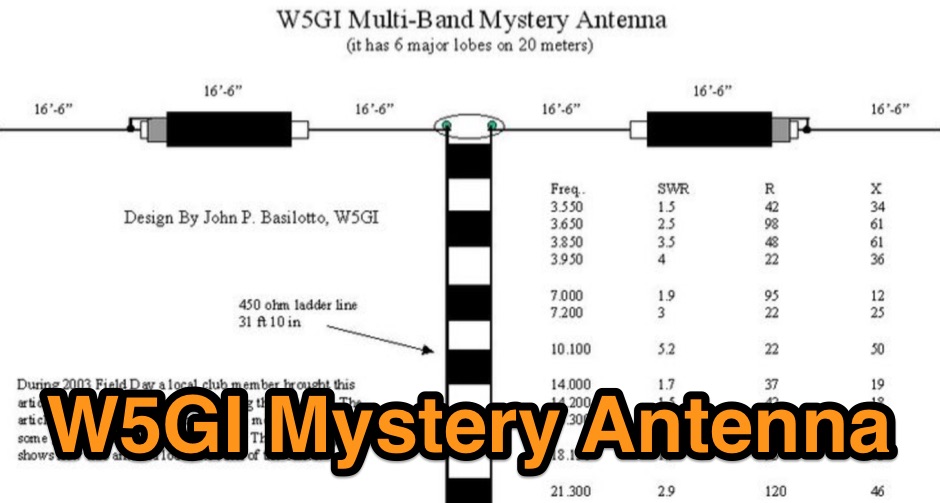 Multi-band wire antenna covering 80 to 6 meters with low feed point impedance.
 -
 17 m reduced size coaxial moxon rectangle, an exercise with an MFJ 259B plans by N0KHQ
 -
 A delta loop antenna for 17 meters band include eznec antenna model file
 -
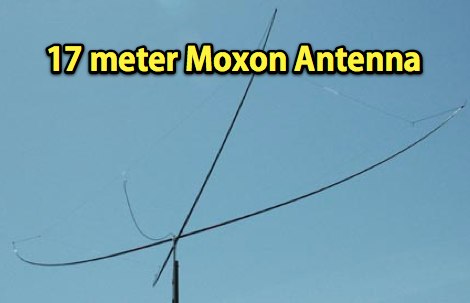 A moxon antenna project made with wires and fiberglass poles
 -
 An almost invisible wire antenna for the 17 meters band
 -
 2-Element parasitic Yagis for the Shortwave-Bands 10-12-15-17-20-30m. The antennas are feeded with the DK7ZB-match. A quarter-wave choke of coax is grounded at the socket.
 -
 17 Meter 3 element TA33 junior mono band yagi antenna conversion project by K6TC
 -
 All these plans use the DK7ZB match
 -
 To build this antenna you need a lot that is at least 100 feet across. Antenna covers all bands 80-10 meters + 30, 17, 12 meter WARC Bands
 -
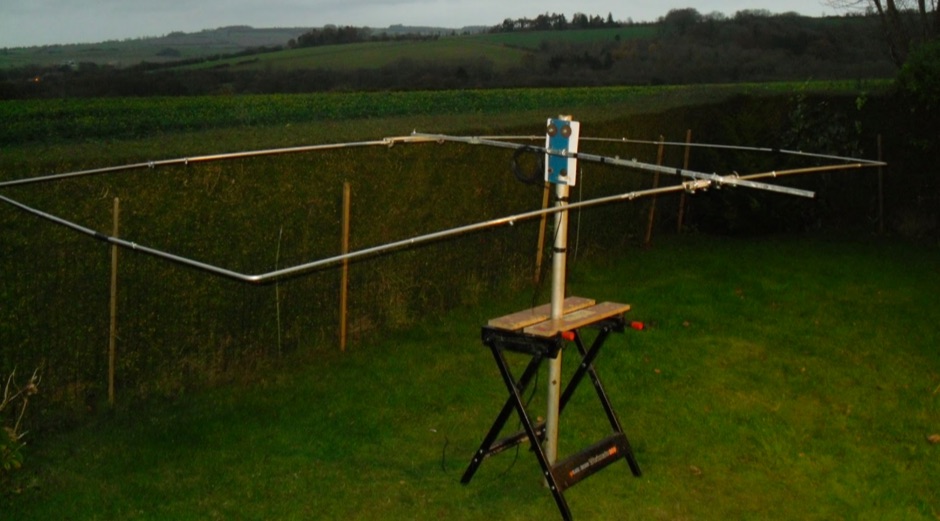 Useful hints & tips on building a 10 and 17 meter Moxon Antenna
 -
 N0KHQ Moxon rectangle for 17 meters, constructed from RG-58 coaxial cable
 -
 10-12-15-17 meter band yagi antenna
 -
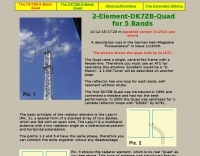 2 element Quand antenna for 10 - 12 - 15 -17 - 20 meters band
 -
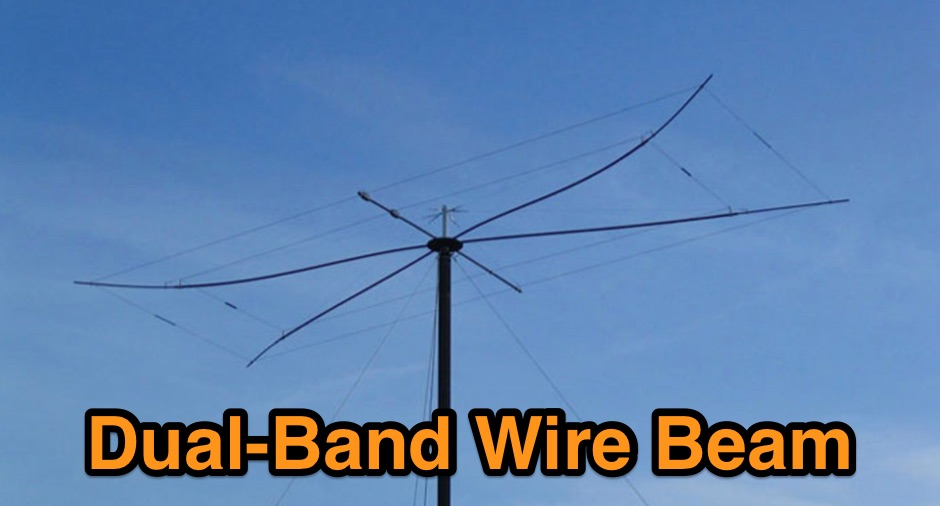 The Dual-Band Wire Beam was inspired by L.B. Cebik's (W4RNL) article The Elusive Moxon Nest. Fiberglass tubing spreaders, Flexweave elements, an aluminum hub, and two die-cast aluminum flanges combine to provide a 12/17m Moxon nest with one 50 ohm feed.
 -
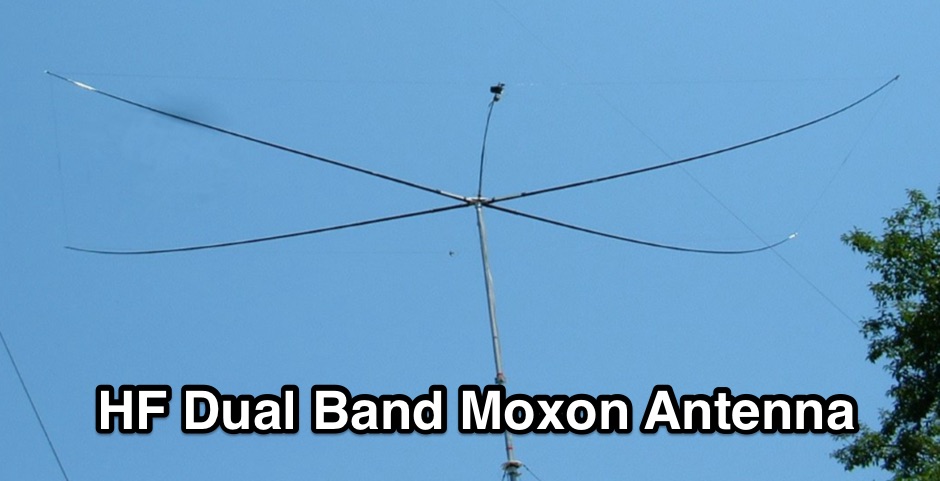 A Moxon rectangle antenna for 17 and 20 meters band
 -
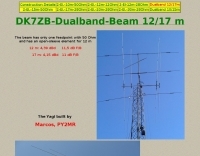 The beam has only one feedpoint with 50 Ohm and has an open-sleeve element for 12 m by DK7ZB
 -
 A low cost, low profile DX antenna fro 17 Meters
 -
 KD6WD introduce moxon rectangles, and in particular explains how he built a moxon antenna for 15 17 and 20 meters band with excellent pictures
 -
 A Moxon rectangle antenna projects for the 6 10 15 17 and 20 meter band but include drawings, plans, statistics and homebrewing statistics.
 -
 A Quad Loop antenna for 17 meter band
 -
 Using moxon rectangles for WARC-Band antennas
 -
 EI7BA Multiband Cubical Quads projects, includes two elements quad antennas for 10 12 15 17 20 meters band. Performance considerations, detailed pictures and construction notes.
 -
 A 10-20 meters coverage delta loop antenna. After relocating, DL2HCB designed a multiband loop antenna to cover 10-20m with an open-wire feed for impedance matching and compact installation. Inspired by the mini-X-Q design, a modified 10m delta-loop was built, enhanced with a 1/4 wave shorted stub for 28 MHz using 450-ohm ladder line. The antenna delivers east-west broadside radiation and performs as a closed loop on other bands. Operational tests yielded strong European signals and successful DX contacts, including a 20m QRP QSO with FY/DJ0PJ.
 -
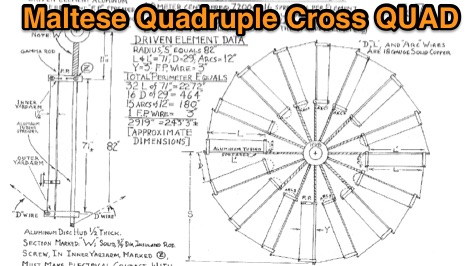 Explore the innovative Pfeiffer Maltese Quad Antenna System for multiple bands.
 -
 A home brewed rotary dipole antenna for 12 and 17 meters band with pictures and construction details
 -
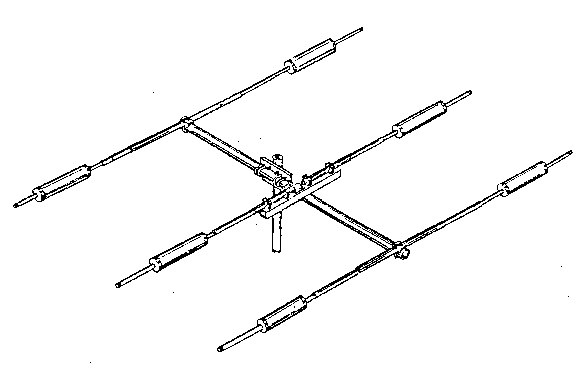 Adding 17 meter band to Mosley TA-33M yagi antenna
 -
 WA2UGT X-beam antenna for 17 meters band
 -
 K6SGH introduce the hamloop antenna L7 series
 -
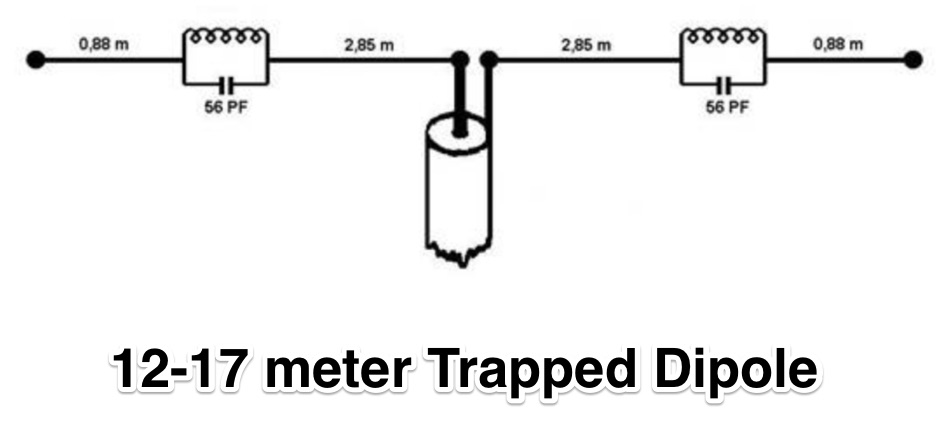 A small sized and very cheap antenna project that allow you to work on WARC bands with a total gain very close to the dipole in both bands. On 12 meters is a normal dipole, while on 17 is a trapped dipole. Article in Italian
 -
 A dipole antenna for 12 17 and 30 meters band
 -
 A 3 element yagi antenna for 17 meters
 -
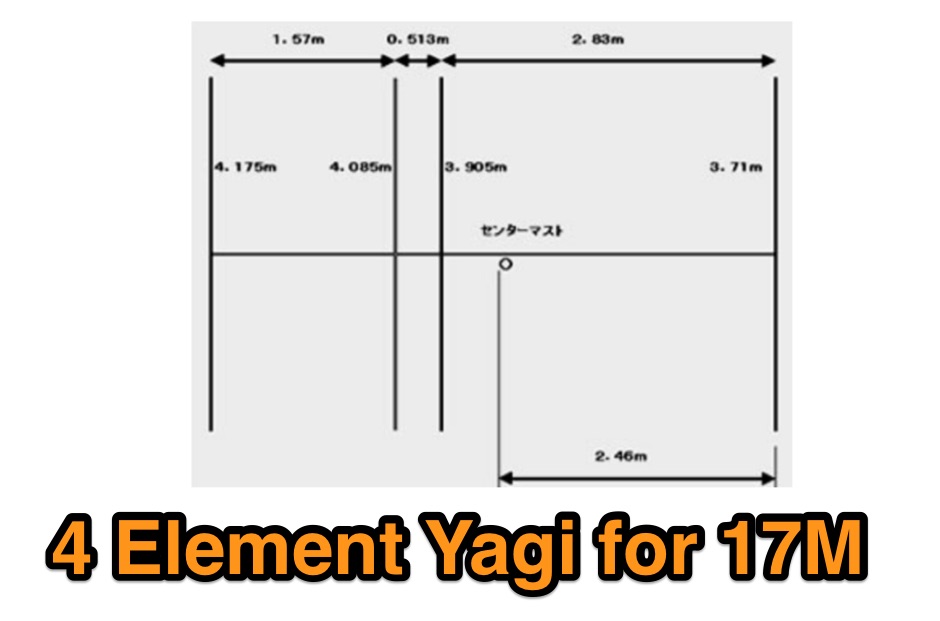 A 4 element yagi beam antenna for the 17 meters band with pictures and element dimension and spacing