Fractal Antenna
Advanced antenna design using fractal geometry for ham radio operators.

Fractal antennas use self-similar geometric shapes to achieve compact designs, often allowing multi-band operation or reduced physical size compared to traditional antennas. Hams experiment with these unique structures to fit antennas into smaller spaces, making them popular for portable operations, stealth installations, or when real estate for full-sized arrays is limited. The concept applies to various antenna types, from simple wire designs to more complex Yagis and quads.
Operators interested in homebrew antenna projects can find designs for HF bands, including experimental fractal quads for 10 meters and beam antennas for 20 meters. Resources often include construction details and performance observations, like those shared by W1YW and M0WWA. There are also theoretical studies and courses, such as those from La Ecole nationale superieure, for hams wanting to understand the underlying principles of fractal geometry in antenna design.
-
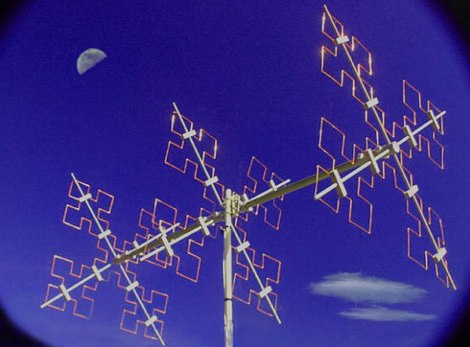 A Quad Fractal Antenna for 20 meters band by F3DD
 -
 Since they were first described by the French mathematician Benoit Mandelbrot in the mid-1970s, repeating geometric figures known as fractals have fascinated computer scientists, mathematicians and graphic artists.
 -
 A beam fractal antenna for 20 meters band
 -
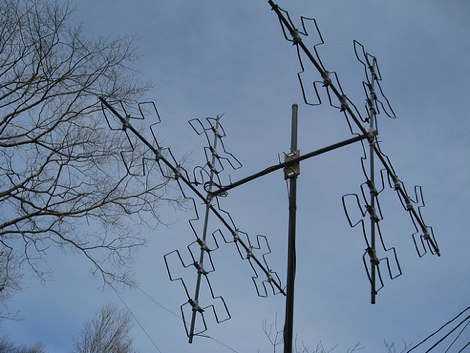 An experimental fractal Quad antenna for 10 meter band project by AG1LE
 -
 The aim of the project is test if fractal antennas can work acceptably on HF bands.
 -
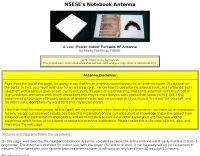 A Low -Power Indoor Portable HF Antenna by Monty Northrup, by N5ESE
 -
 W1YW QRZ page dedicated to fractal antennas
 -
 Observing how fractal antennas might exhibit characteristics that are correlated to their form by kb7qhc
 -
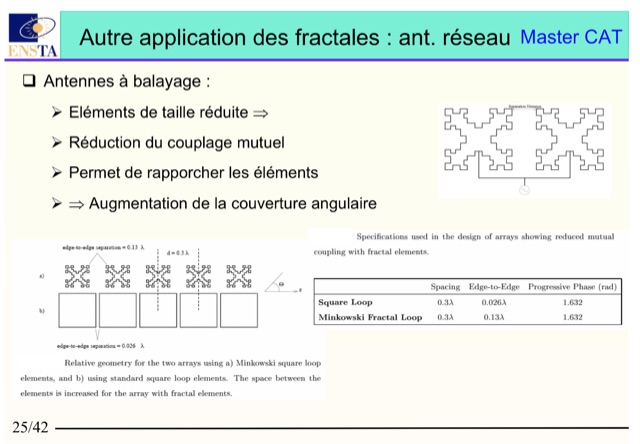 A course on fractals antennas theory provided by La Ecole nationale superieure de techniques avancees in France. Course is in French.
 -
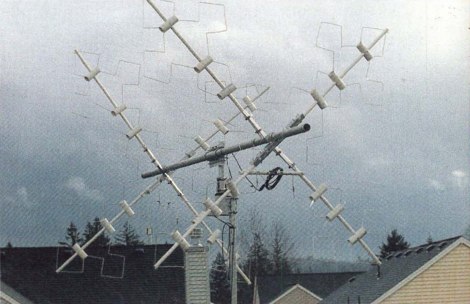 Fractal Quad Yagi Antenna by KF7BS published on 73 magazine October 99
 -
 Fractal antenna for 28 Mhz band by AG1LE