Array Antennas Directory
Array Antennas Listing

Array antennas combine multiple elements to achieve specific radiation patterns, gain, or directivity. Hams use arrays for everything from improving DX reception on 160 meters to building high-gain systems for VHF contesting. Understanding how element spacing, phasing, and current distribution affect performance is key to successful array projects.
This category offers practical designs for various array types, including phased vertical arrays for bands like 40 meters, and horizontal arrays such as the K5UA 40 meter Phased Array. Operators can find information on building multi-element Yagis for 80 and 40 meters, or log periodic dipole arrays (LPDAs) for continuous coverage across multiple HF bands. There are also resources for constructing components like a Stackmatch to combine antennas for lower radiation angles or different beam directions.
-
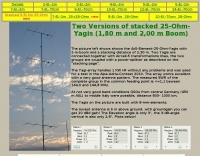 Two Versions of 5 elements stacked 25 Ohm Yagis with 1,80 m and 2,00 m Boom
 -
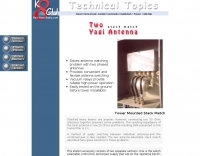 Solves antenna matching problem with two phased antennas. Stacked rotary beams are popular. However, connecting two 50 Ohm antennas together presents some problems.
 -
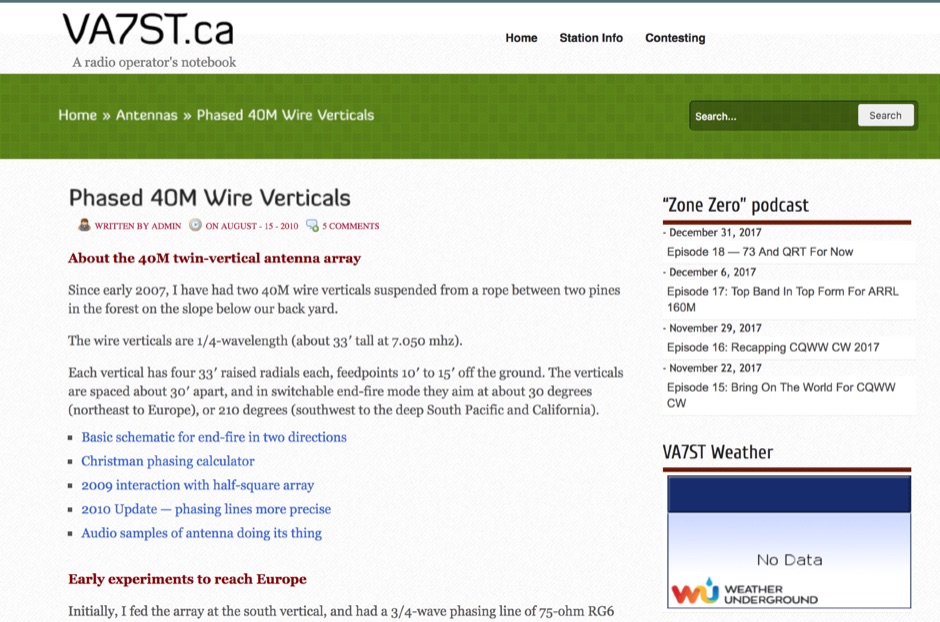 40 meters elevated vertical antenna array at VA7ST
 -
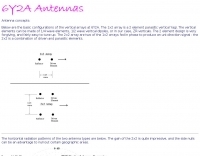 Configurations of the vertical antenna arrays used at 6Y2A
 -
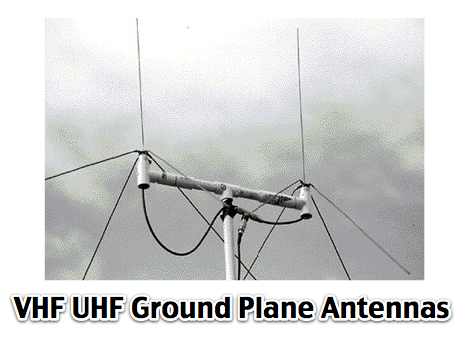 Phased array Ground Planes antennas for 144 Mhz
 -
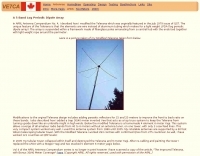 Modified version of the Telerana antenna which was orginially featured in the July 1979 issue of QST. The array is suspended within a framework made of fiberglass poles emanating from a central hub with the ends tied together with light weight rope around the perimeter. 10-15-20-30-40 meter band coverage
 -
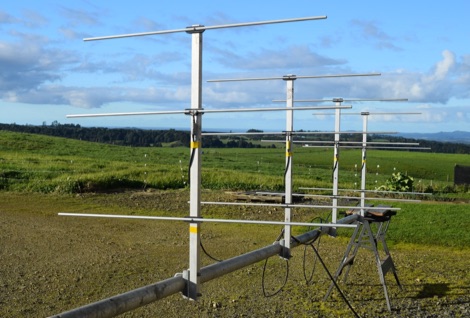 A stacked Yagi array for ZL1SIX 2m WSPR
 -
 The Contesters Choice
 -
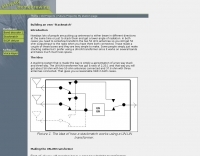 Nowdays lots of people are putting up antennas to either beam in different directions at the same time or just to stack them and get a lower angle of radiation. Use this stackmatch to match you array.
 -
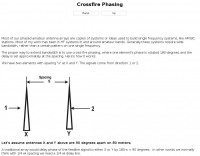 Phased antennas elements use radiated fields from multiple elements to produce nulls.
 -
 Wikipedia page about collinear antenna arrays
 -
 About collinear array antennas
 -
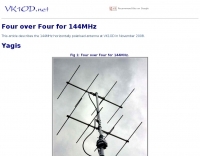 This article describes the 144MHz horizontally polarised antenna at VK1OD in November 2008. The antenna uses two identical four element arrays that were constructed around 1970
 -
 The Powerpoint presentation below was given by Fred Hopengarten, K1VR, at the 1998 Dayton Hamvention Antenna Forum
 -
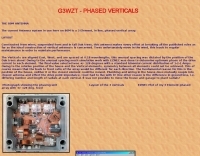 Vertical phased antenna systems plans by G3WZT
 -
 This page describes a homebrew 80/40 meter trap vertical antenna. Includes an interesting antenna raising system that allow easy setup and tuning.
 -
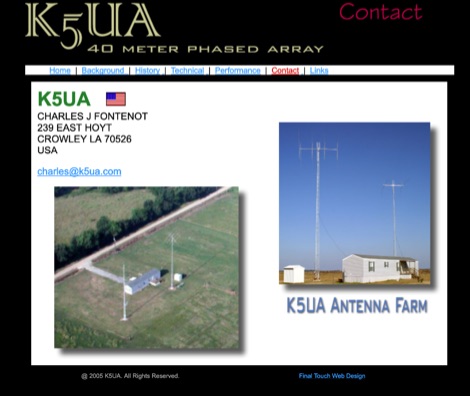 The intent of this site to share information about the design of a 40 meter horizontal phased array antenna.
 -
 Experiments with phased wire vertical antennas on 40 meters at VA7ST
 -
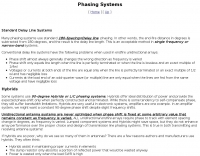 Antennas, Standard Delay Line Systems, Crossfire Phasing or Hybrids
 -
 a guide to help install arrays
 -
 All about stacking and matching yagi antennas.
 -
 The Superphaser-2 is an antenna phasing unit based on the PSA-A Phase Shift Amplifier module
 -
 The array consists of 7 vertical antennas arranged as 6 verticals in a hexagon shape plus 1 additional vertical in the center of the hexagon
 -
 Technical Correspondence, QST, July 1990 - Why even "perfect" phased array element currents don't produce perfect patterns.
 -
 Anyone attempting to work DX on Top-Band 160 Meters, soon learns of the need for a good receiving antenna. This is a 160 meter 8 element receiving array.
 -
 How to calculate "phasing line" lengths that actually work.
 -
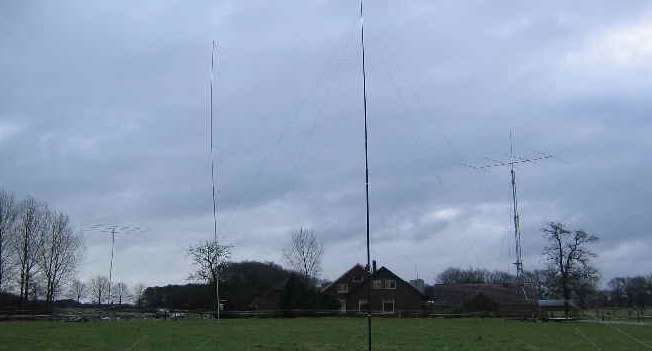 A detailed project on building and phasing two 40-meter vertical antennas, including construction photos, SWR measurements, and Christman phasing
 -
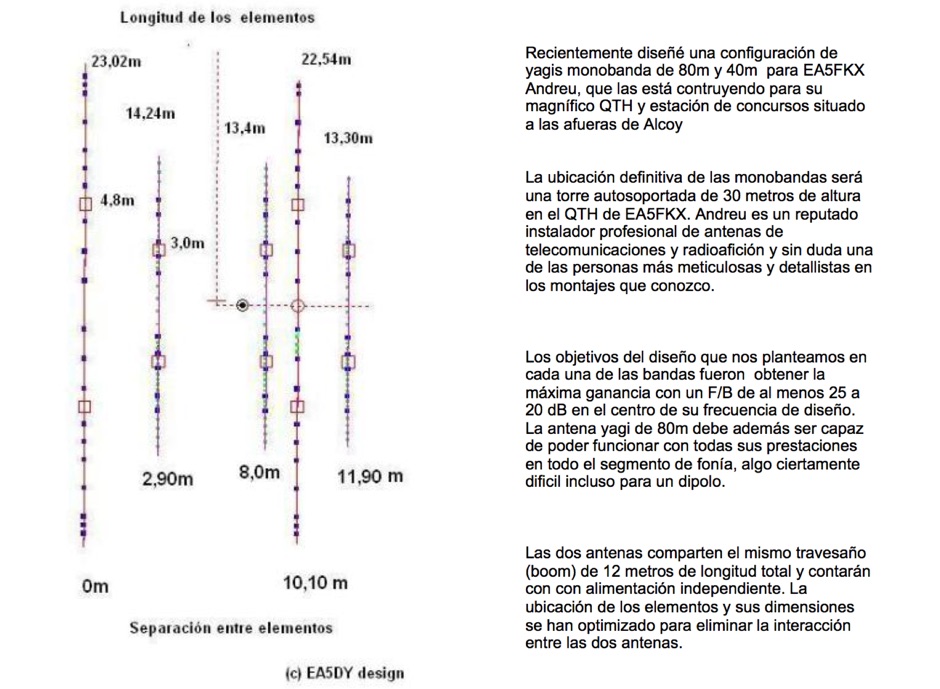 Design plan of an array of a two element yagis for 80m and a 3 element 40m antenna sharing a single 12 meters long boom by EA5DY
 -
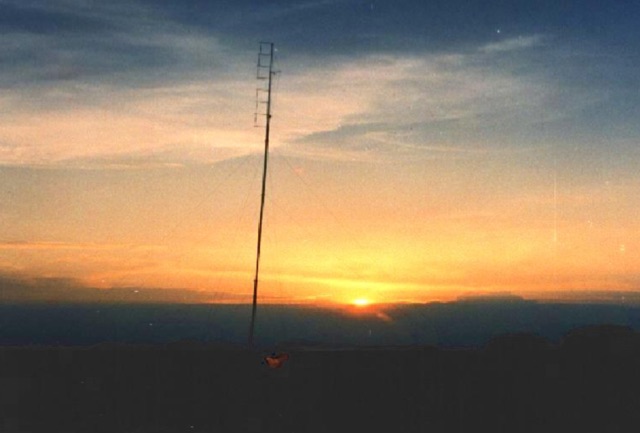 This stacking offers a well known simple phasing technique. All elements can be fed in parallel by open wires provided that they are fed in phase. This can be achieved by twisting the open wire phasing-lines at 180 degrees.
 -
 Distributed Antenna Systems technology used for gaining better coverage and using a lower power.
 -
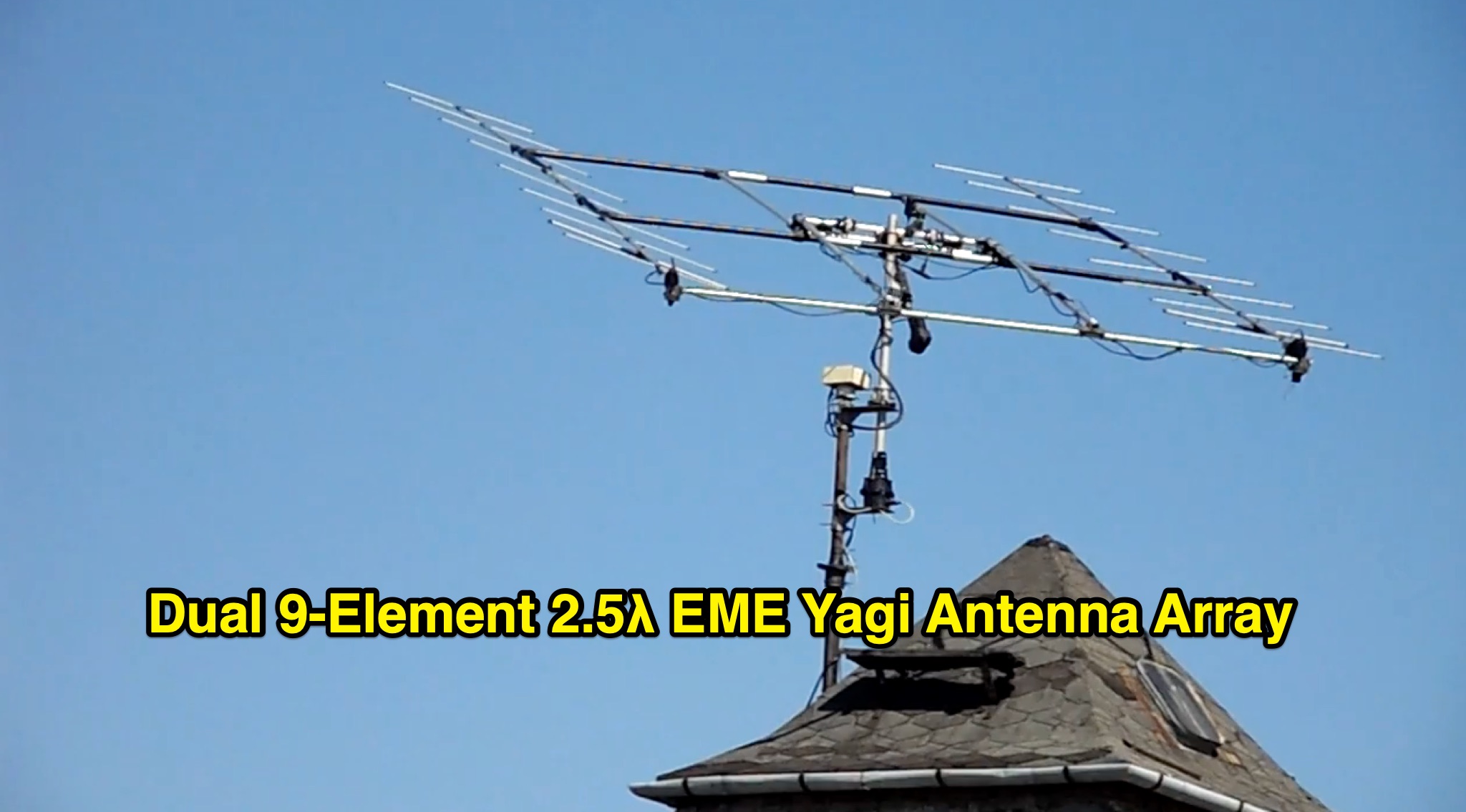 This project describes a high-performance EME antenna array consisting of two home-designed 9-element Yagis, each about 2.5 wavelengths long, combined into a 25-ohm system and matched to 100 ohms using 9/4λ sections of 50-ohm coax. The array supports rotatable polarity from 0° to 180°, allowing both horizontal and vertical polarization to optimize moonbounce performance under varying conditions. Despite operating for years without a balun—something another designer called “disastrous”—the system has delivered strong results, including copying very weak DX such as VK3KH at about -25 dB with only 120 W (around 2 kW ERP). The builder continues to refine the mechanics, having installed new gear motors and an upgraded follow-up control system in 2011.
 -
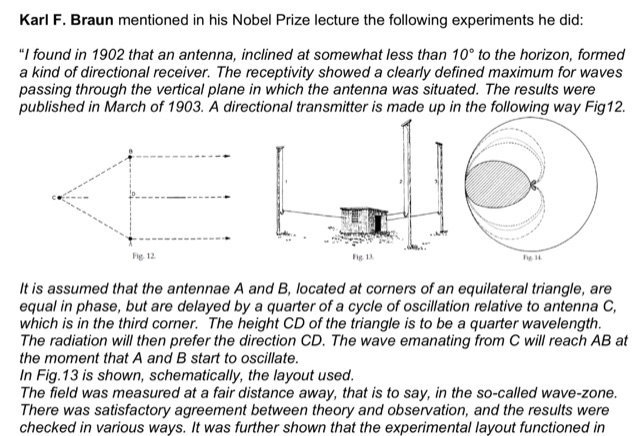 Phased array antennas are composed of multiple individual antenna elements that can have their phase and amplitude controlled to steer the main beam direction in real-time. They are used in radar, communications, and electronic warfare, and offer improved gain and reduced side lobes. A comprehensive document on Phased Arrays include techniques to increase the Antenna Gain and change the Radiation Pattern
 -
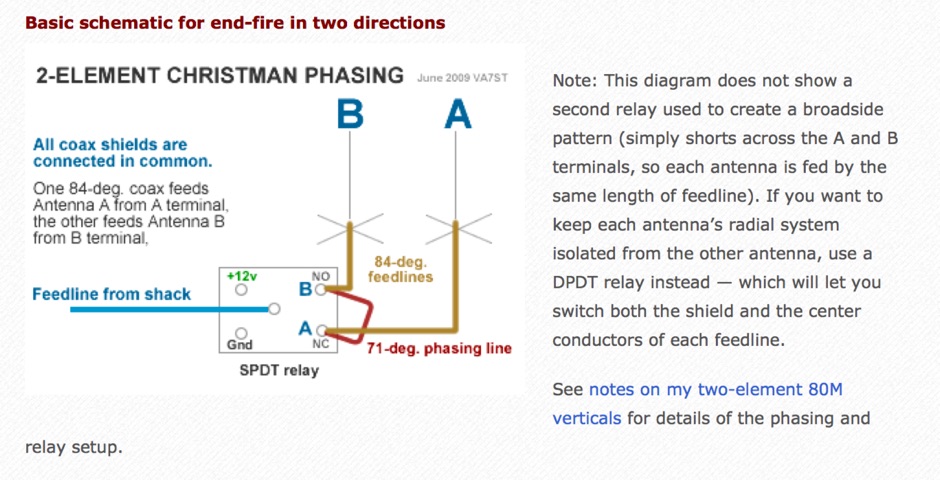 Phased wire vertical antennas for 40 meters band
 -
 Stacking yagi antennas for 50 Mhz band article by by Zaba, OH1ZAA/NN0Y
 -
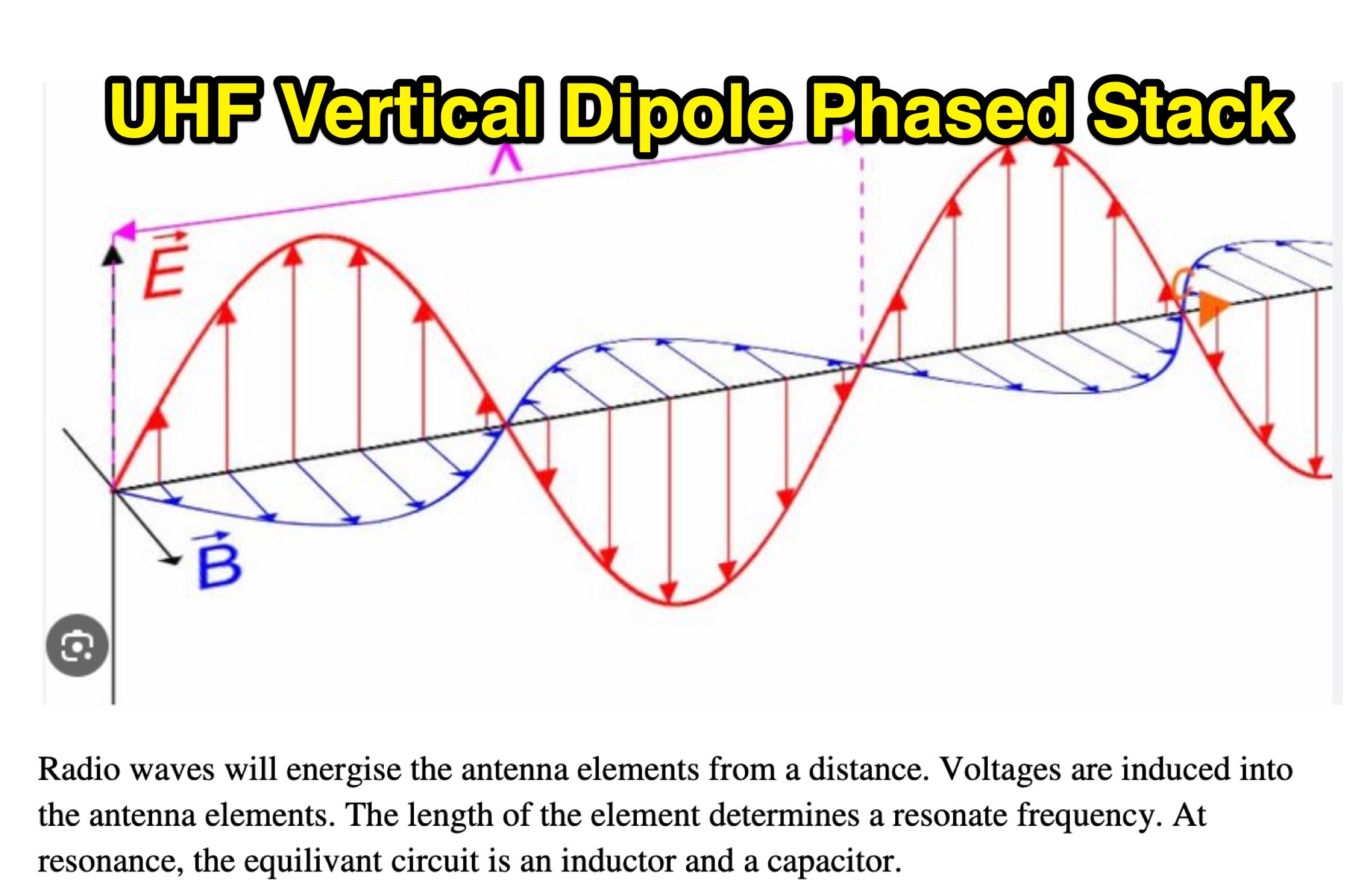 This PDF document discusses the setup and operation of UHF vertical dipole phased stack antennas for hams. It covers the advantages, principles, and practical aspects of using this type of antenna configuration. The document is a useful resource for amateur radio operators looking to improve their UHF station setup with phased array antennas.