Helical Antennas: High-Gain Design Techniques
Build Efficient Helical Structures

Helical antennas are known for their high-gain and broad frequency characteristics. Typically, they exhibit a gain of 10 dBi or more, with favorable front-to-back (F/B) ratios. These antennas can be designed for various ham bands, mostly used in UHF SHF scenarios but also experimented on HF bands, are effective in both near field and far field applications. The radiation pattern is circularly polarized, making them suitable for diverse operating contexts. Proper impedance matching is crucial for minimizing SWR and maximizing efficiency. Dimensions vary based on design specifications, but typical helical structures are compact and lightweight, ideal for portable setups.
Key components for constructing helical antennas include a suitable feedline, balun, and a robust ground system. Materials often consist of copper wire or aluminum tubing, which facilitate optimal current distribution. Utilizing tools such as a Smith Chart can aid in achieving proper impedance matching. For enhanced performance, consider incorporating radials or a counterpoise system.
Related Categories
-
 Here is the design of a 2.4 GHz antenna that is ideal for amateur satellite communications. This antenna is easy to assemble because the design itself tolerates inaccuracies in the construction without really affecting performance.
 -
 An easy to build, compact antenna for wireless lan applications that offers a reasonable amount gain.
 -
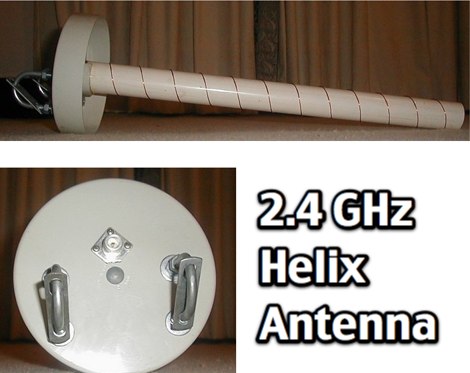 Concise instructions on making a broadband helical antenna for 2.4GHz use, such as: 802.11b wireless networking 2.4GHz video links.
 -
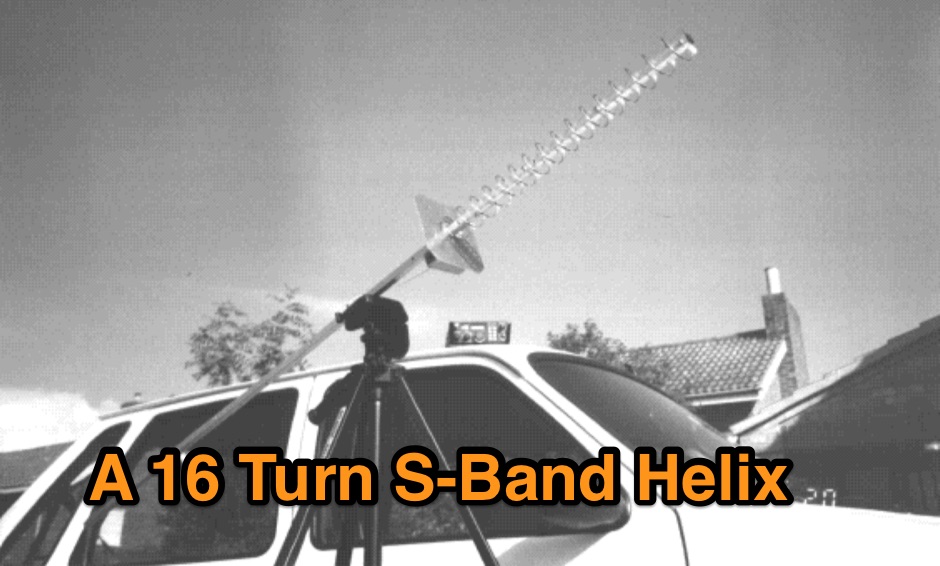 This design represents the smallest practical antenna for Oscar-13 mode-S. Perfect beacon reception at all times is possible, and acceptable SSB even at 43,000 km range.
 -
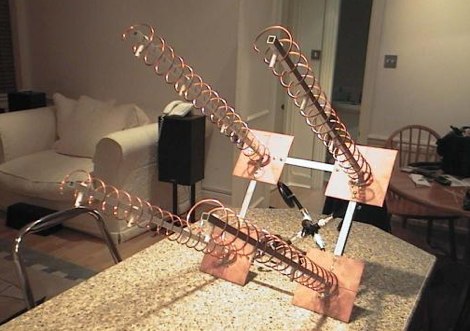 A homebrew project of a quadruple helix antenna system based on G3RUH 16 turn helix antenna for 2.4 GHz.
 -
 The page discusses Axial-Mode Helical Antennas, focusing on turning helical antennas over perfect ground and modeling helices in NEC-2 for optimized design. It covers topics such as high-gain performance, broadband, impedance matching, radiation pattern, feedline, balun, near field, far field, and DIY applications.
 -
 Notes on Axial-Mode Helical Antennas in Amateur Service. Helix Basics, Modeling Issues, and Short Helical Antennas Over Perfect Ground
 -
 An on-line javascript calculator and quite a few pictures to show how to make a helix antenna.
 -
 This article summarizes probably the most extensive numerical modelling calculations on the helical antenna ever performed.
 -
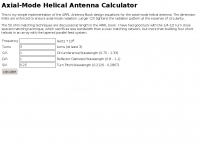 This is my simple implementation of the ARRL Antenna Book design equations for the axial-mode helical antenna.
 -
 Improved Helical Antenna Design for 802.11b WLAN by PA0HOO
 -
 Article on Helical Antennas in french
 -
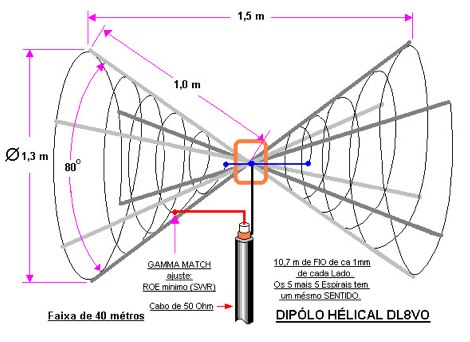 The page provides a project for an helical dipole for the 40 meters band, resonating on 7 MHz, created by PY1ZFK based on a design by DL8VO. It includes detailed instructions on building the antenna.
 -
 Helical antennas have long been popular in applications from VHF to microwaves requiring circular polarization, since they have the unique property of naturally providing circularly polarized radiation. Paul Wade W1GHZ
 -
 Helix antenna design and construction details
 -
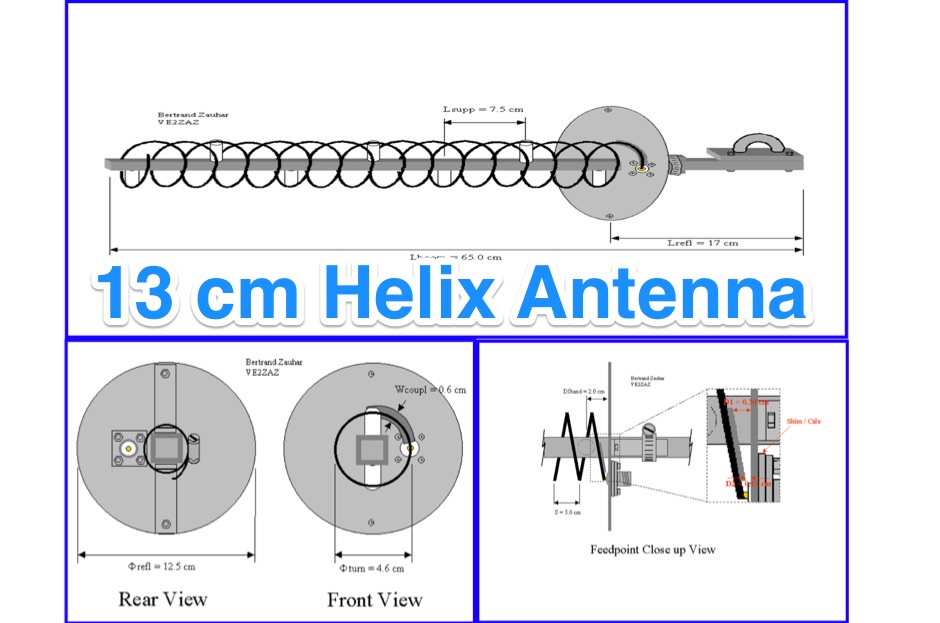
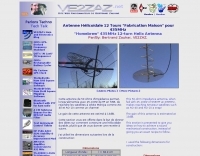 homebrew an helix antenna for 435 MHz by VE2ZAZ
 -
 Plan of a helix antenna for 2 meter satellite use by VK5ZAI
 -
 Helix antenna calculator, to design and make helix antenna plans
 -
 Calculating HF helical whip antenna for mobile or portable operation
 -
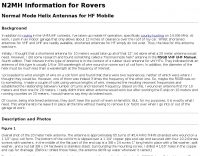 Normal mode helix antennas for HF mobile. Photos andn plan for a 20 meters mobile helix antenna by N2MH
 -
 by Dr. D.T. Emerson, National Radio Astronomy Observatory (NRAO++). Antenna Compendium Volume 4, pp 64-68, 1995, published by the ARRL.
 -
 A marriage of the windom and slinky antennas, experimental home brew antenna by NC4TC
 -
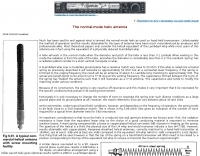 A helix will work in the normal mode when the diameter and pitch of the helix is less than 0.1 Lambda
 -
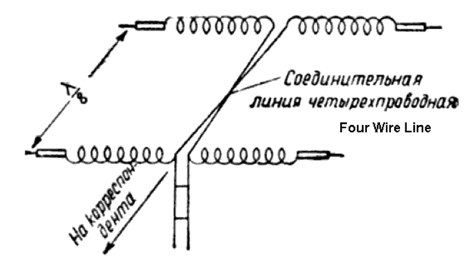 This antenna is intended for the 20-meter Band. There are two Voltage Fed Helical Dipoles, made with 2 slinky that fed with phase shift in 90 degree
 -
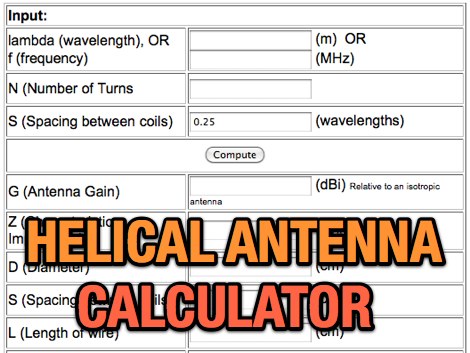 Helical antennas invented by John Kraus give a circular polarized wave. They are one of the easiest to design. Find a tube with a circumference equal to one wavelength, and wrap wire in a helix spaced a quarter wavelengt
 -
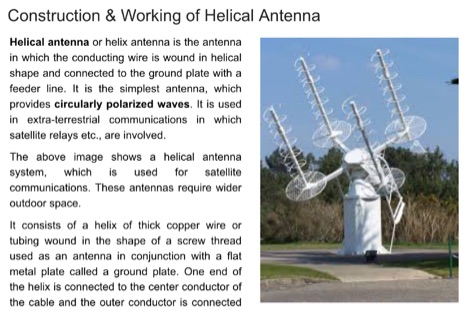 Helical antenna or helix antenna is the antenna in which the conducting wire is wound in helical shape and connected to the ground plate with a feeder line. It is the simplest antenna, which provides circularly polarized waves.
 -
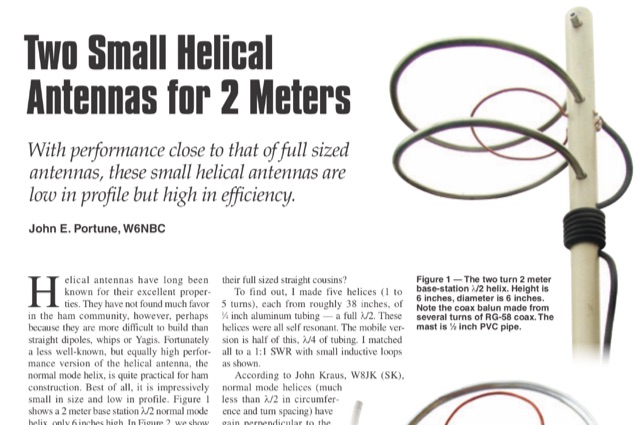 This article is about two excellent small helical antennas for the two meters band. With performance close to that of full sized antennas, these small helical antennas are low in profile but high in efficiency.
 -
 An easily transportable vertical antenna for 20 meters collapsible to 4 feet
 -
 Online helix antenna designer, calculate size of helix antennas online
 -
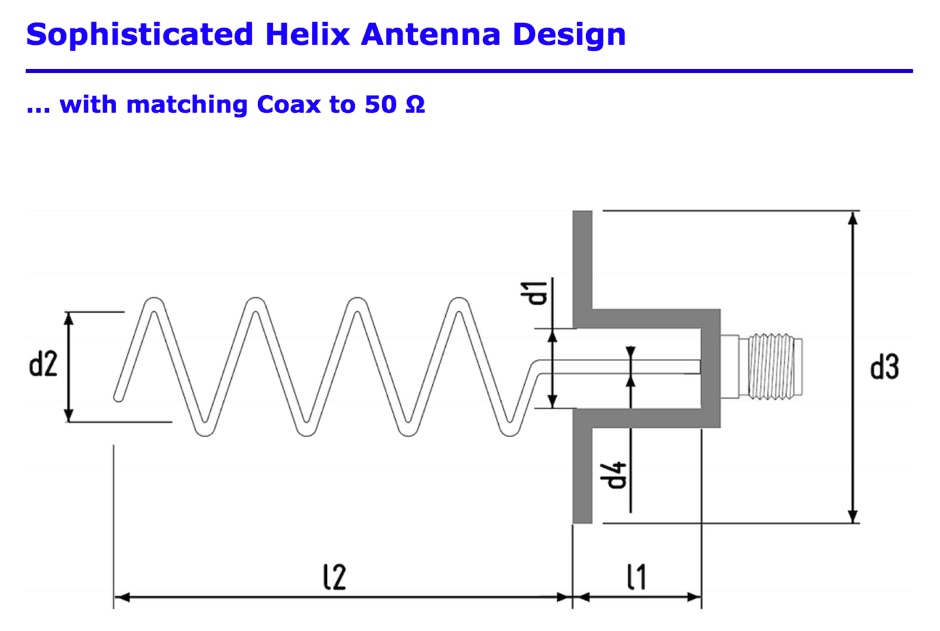 Helix antenna online calculator with match calculator
 -
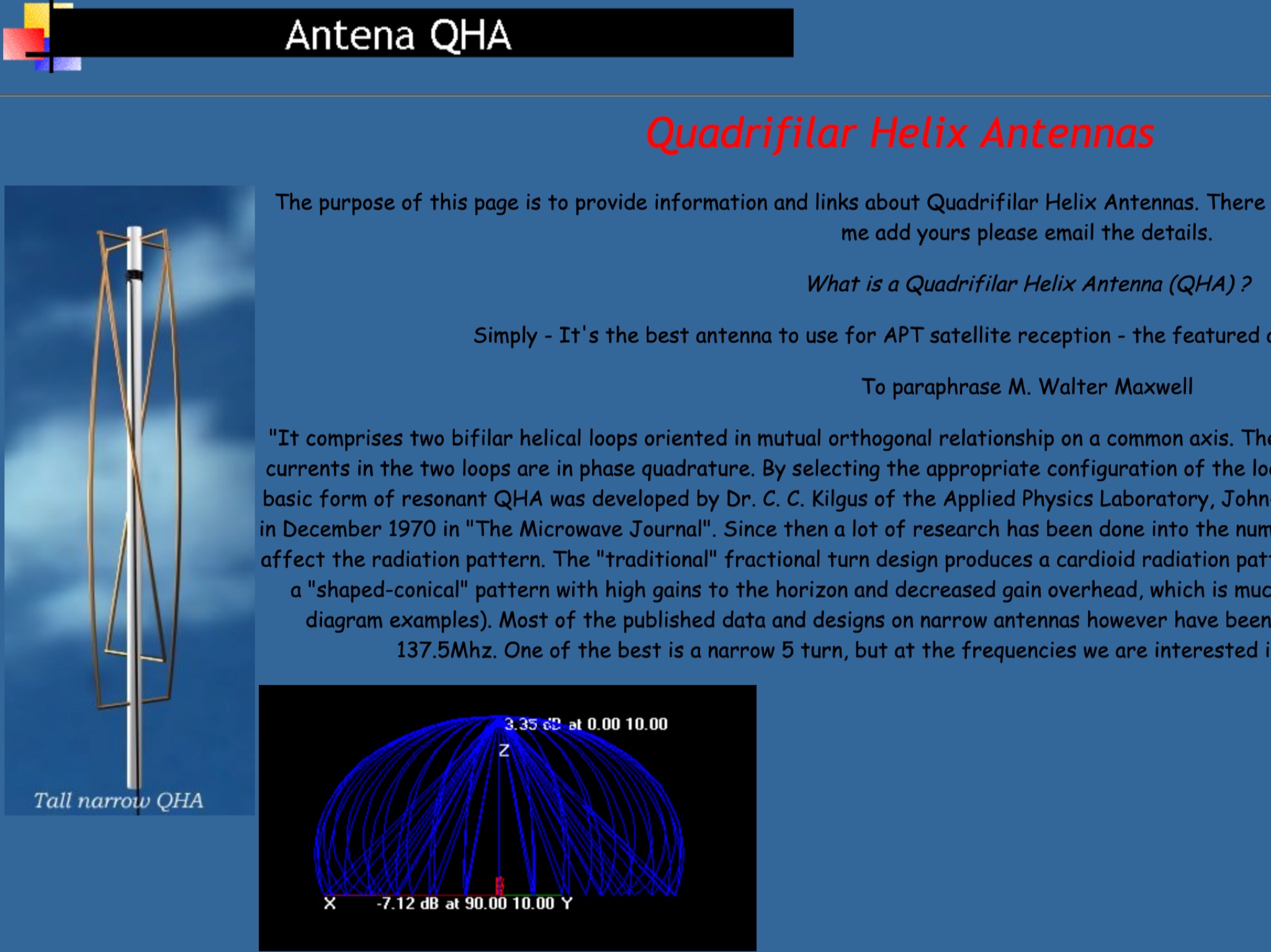 This page provides information and links about Quadrifilar Helix Antennas, the best antenna for APT satellite reception. It explains the basic design and configuration of QHA, including the research and developments that have been made over the years. The page offers insights into the radiation patterns and benefits of using QHA for APT ground stations, with examples of polar diagrams. If you are interested in learning more about QHA and its applications, this page is a valuable resource.