J-Pole Antenna: DIY Build Plans
Construct Your Own J-Pole

J-Pole antennas are a popular choice for amateur radio operators due to their simplicity and effectiveness. This end-fed half-wave antenna is designed to operate efficiently on VHF and UHF bands, typically covering 2 meters and 70 centimeters. The design features a quarter-wave matching section that provides good impedance matching to the feedline, ensuring minimal SWR. The J-Pole can be constructed from materials like copper pipe or PVC, offering a robust structure. Its omnidirectional radiation pattern makes it suitable for various applications, including packet radio and general communication. Proper height and placement can enhance performance, allowing for effective long-distance contacts.
To build a J-Pole antenna, you will need basic materials such as copper pipe or PVC, a feedline, and a balun for optimal performance. The construction involves cutting the pipe to specific lengths to achieve resonance at the desired frequency. Common tools include a soldering iron, pipe cutter, and measuring tape. Ensure to follow the correct dimensions for the matching section to maintain low SWR. Additional components may include connectors and mounting hardware for stability.
Related Categories
-
 A vertical wire J-pole antenna for 10 meter, an en-fed zepp for 28.4 MHz
 -
 A portable dual band j-pole antenna for VHF/UHF operations.
 -
 A simple and cheap dualband j-pole antenna for 144 and 430 MHz
 -
 Great first time J-pole project. Covers most of the basics. This small and thin design also makes it good for several stealth applications.
 -
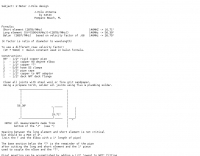 J-Pole Antenna by K4TAX
 -
 Great first time J-pole project. Covers most of the basics. This small and thin design also makes it good for several stealth applications.
 -
 The J pole vertical for 14MHz is built from a fifty-foot TV push up mast by Mike Higgins, K6AER
 -
 Here is a 70cm (440 Mhz) J-Pole antenna that is inexpensive, and easy to build. Author use 1/2 inch copper pipe, and the associated fittings necessary. The dimensions aren't typical however, this is what it took to get its SWR low.
 -
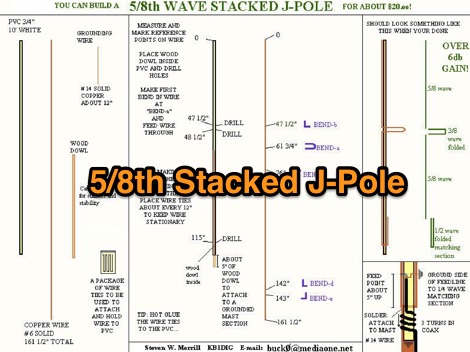 A 5/8 wave stacked j-pole antenna plan
 -
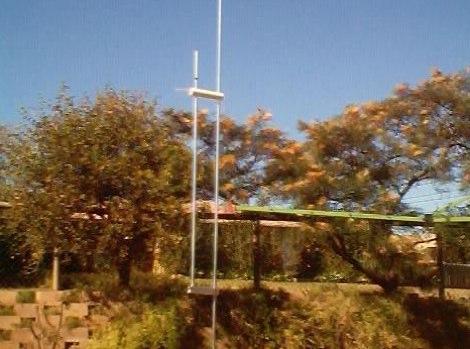 A 6 m 50MHz J-Pole antenna by VKADC
 -
 A j-pole antenna for 6 meters band
 -
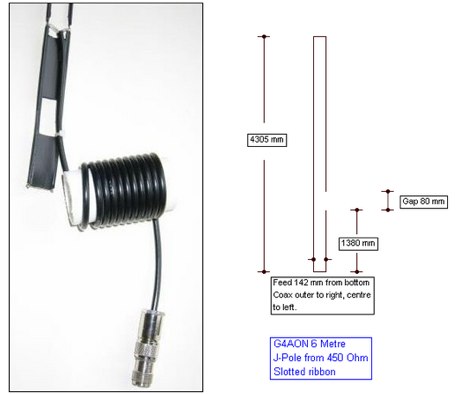 Based on original G2BCX design this J-Pole antenna for the six meter band is made with a homemade ribbon cable. The antenna shown in this article includes a coaxial cable choke feed to remove RF currents from flowing on the outer of the cable.
 -
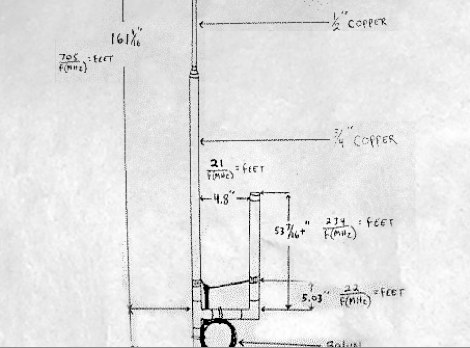 A home made J-Pole antenna for 50 MHz. This article describes how to build a J-Pole antenna for the 6-meter amateur radio band. It's a good choice for those who want an antenna with better performance than a simple wire dipole, but at a lower cost than buying a commercial antenna. The project requires soldering copper pipes and some specific materials, but can be built in a day
 -
 A 2 meter (146 Mhz) J-Pole antenna that is inexpensive, and easy to build.
 -
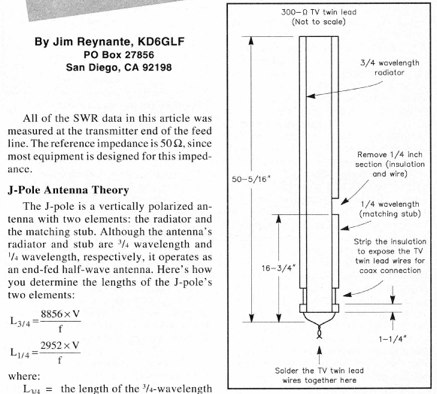 An Easy Dual-Band VHF/UHF vertical Antenna made with a TV twin lead and coax cable
 -
 An antenna for the 2-meter band, made by sliding coax insulator braid over a glass fiber bicycle safety flag pole
 -
 This antenna is unique in that it is enclosed entirely in 3/4" PVC
 -
 Buildin a VHF Jpole antenna with detailed pictures
 -
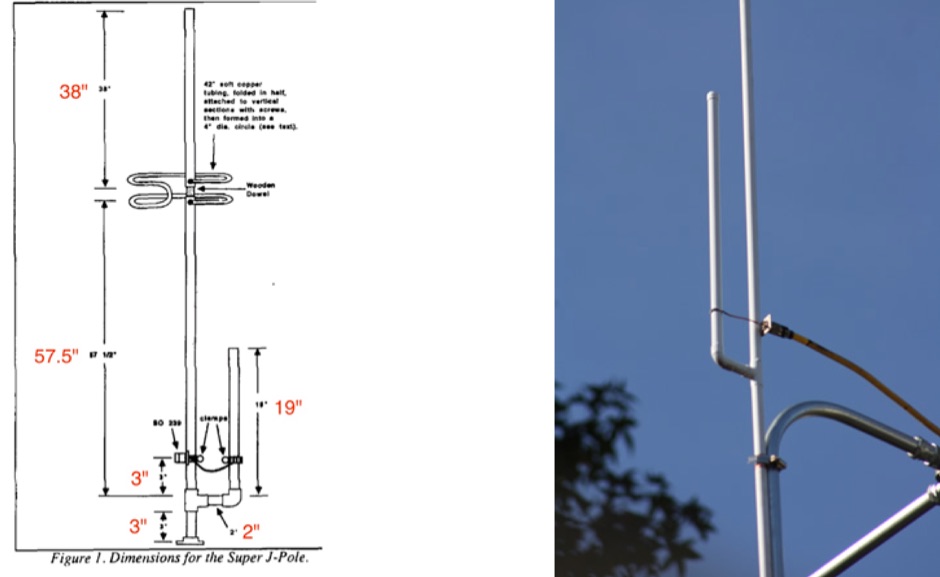 Homebrew a j-pole 2mt and 70 cm antenna project. Make it cheap. This article includes homebrewing instructions, parts lists, tools needed and printable documentation.
 -
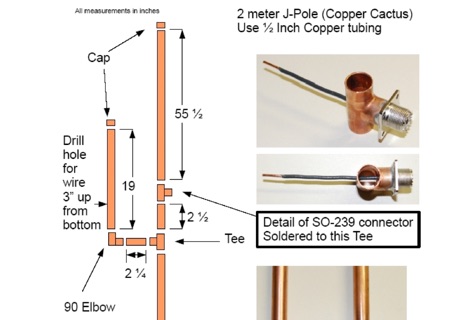 A J-pole antenna plan made using a half inch copper tubing
 -
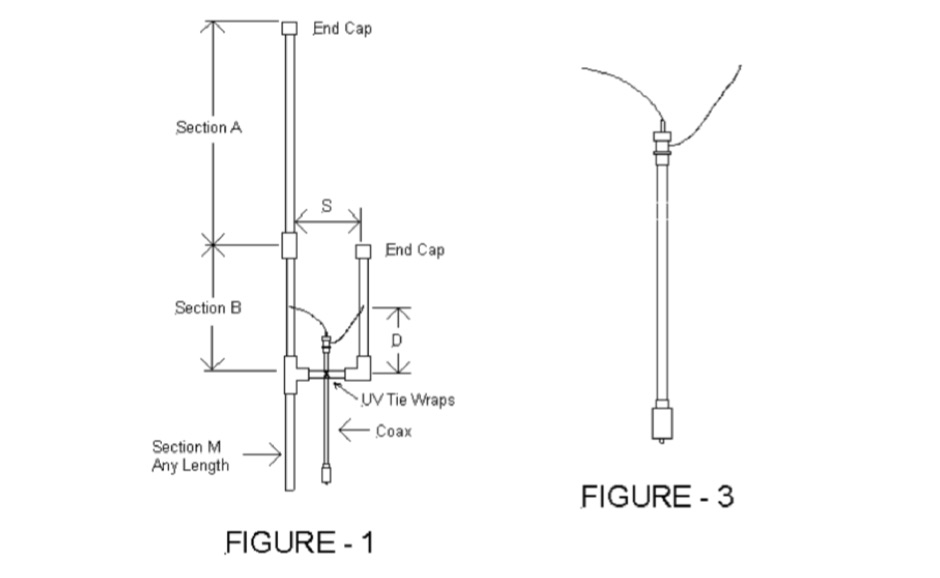 Conejo Valley Amateur Radio Club, article edited by Rory Eikland, KG6HCU and Ken Larson, KJ6RZ, they have had excellent experience building and using J-Pole antennas, and share their experience on planning VHF and UHF Jpole antennas.
 -
 a Javascript for calculating the lengths of tubing to be used for the construction of a Super J-Pole.
 -
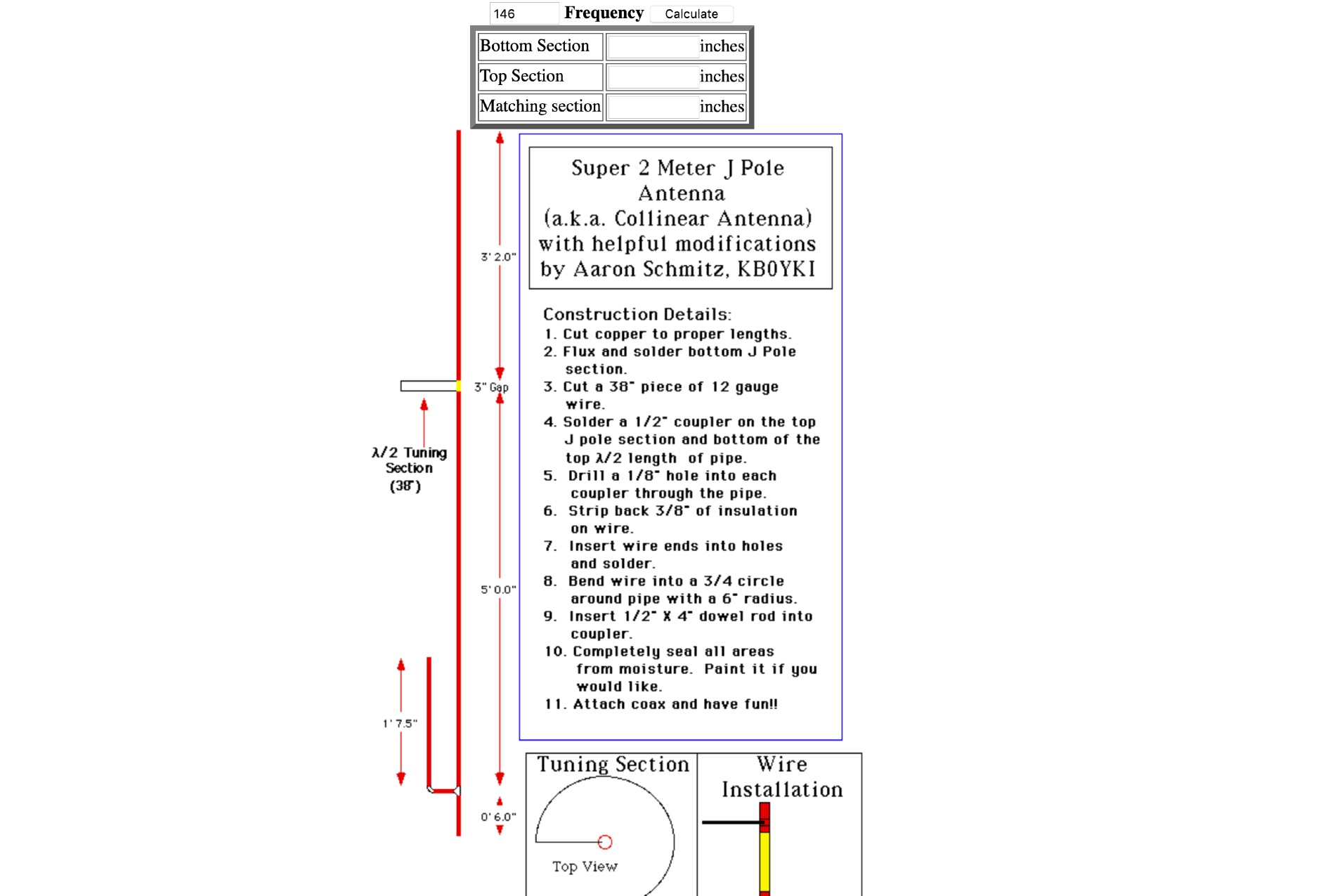 Javascript for calculating the lengths of tubing to be used for the construction of a Super J-Pole in a collinear design
 -
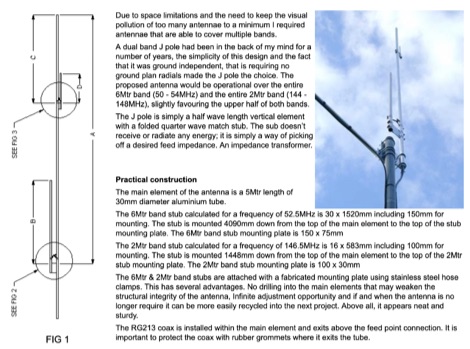 Dual band J pole operational over the entire 6Mtr band (50 - 54MHz) and the entire 2Mtr band (144 - 148MHz), slightly favouring the upper half of both bands by VK6YSF
 -
 A VHF / UHF J-pole vertical antenna de ON6MU
 -
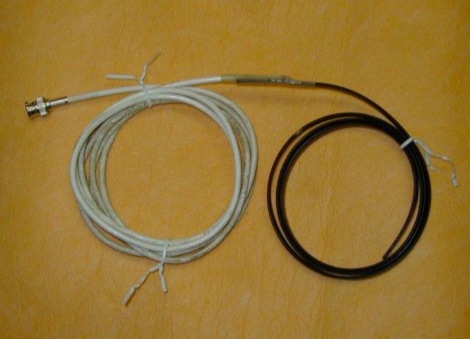 Everybody says keep one in your bag, nobody seems to make one work right. Here's the straight scoop on why the J-pole is not an easy antenna to duplicate!
 -
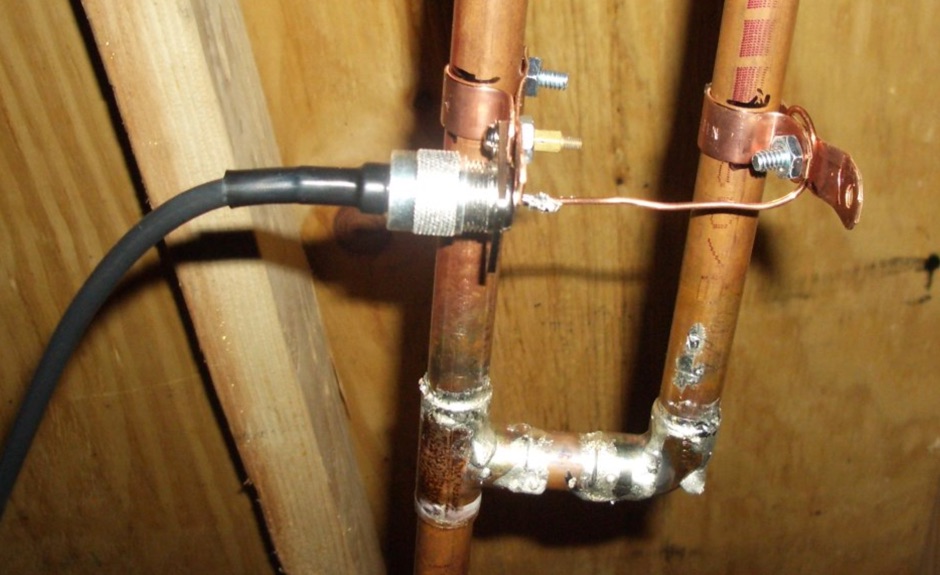 Easy home brew 2 meter copper jpole antenna build - under 20 bucks - Hits repeaters 45 miles away. Parts used bought at home depot build time 1 hour.
 -
 There are many incorrect ideas and claims surrounding end-fed vertical antennas (like the I-Max 2000), end fed horizontal antennas, Zepp, and J-pole antennas. This article describes it.
 -
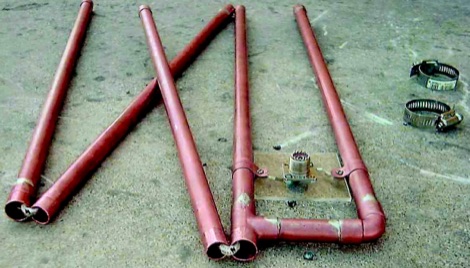 Also known as the Backpacker's Delight Antenna. This Folding J Pole Antenna is the original design of Mike Heiler KA0ZLG and was featured on the Front Cover of the March 2005 QST Magazine.
 -
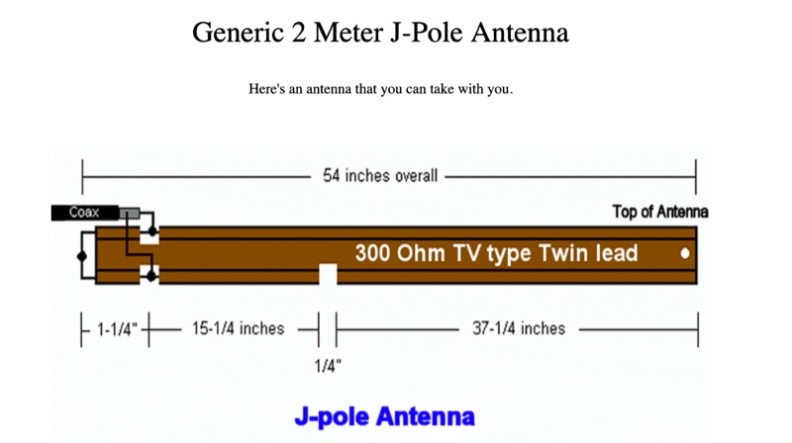 Here's an antenna that you can take with you. This is made from cheap flat 300 ohm TV antenna wire.
 -
 A Simple Nondirectional Antenna for Ten Meters QST February 1950, Easy to build J-Pole antenna for restricted space.
 -
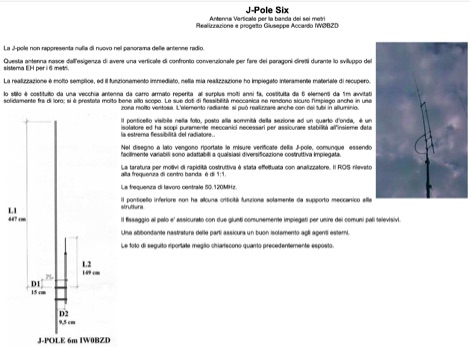 Homebrewed jpole antenna for 50 mhz by IW0BZD, include pictures and schematics, in italian.
 -
 Enter the operating frequency and calculate dimensions of your jpole antenna
 -
 J-pole antenna made easy using a twinlead by W4ZT
 -
 Complete guide to build Jpole antennas with online dimensions calculator.
 -
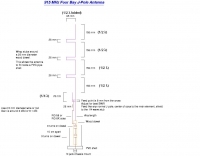 A 915 MHz four bay j-pole antenna plan
 -
 Yo5ofh j-pole antenna plans for 2 and 6 meters
 -
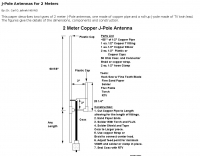 The page describes two types of 2 meter J-Pole antennas, one made of copper pipe and a roll-up J-pole made of TV twin lead, providing dimensions, components, and construction details. It is authored by Dr. Carl O. Jelinek N6VNG.
 -
 A multiband jpole antenna
 -
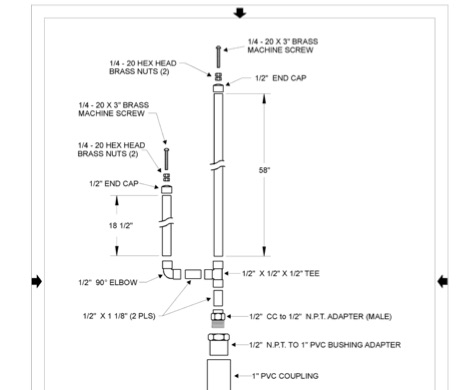 Complete plan for making a 2-meter J-Pole antenna. This drawing in PDF File includes a detailed list of the parts needed to assemble the Jpole antenna for 144 MHz.
 -
 20 meter wire j-pole for 14.2 MHz, a vertical, end-fed half wave antenna by N1LO
 -
 70 MHz jpole half wave antenna by G7OGQ and G8CVF
 -
 The J-Pole antenna is an omnidirectional antenna that can be used for base, mobile and field day stations. It does not need a ground plane, radials or a complicated matching system. The J-Pole can be cheaply, simply and quickly constructed using a variety of techniques, some of which are discussed in this article.
 -
 An adjustable VSWR, 2 meter J-Pole
 -
 J-pole designs, for 50 to 450 MHz by WA6ESC
 -
 Jpole antenna plan for 144 and 435 Mhz
 -
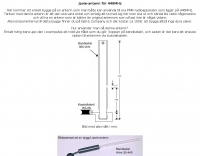 A 446 Mhz J-pole antenna
 -
 The mirror-image J-Pole is very easy to construct and requires only two T-Fittings plus a length of copper pipe.
 -
 A 144/440 dual band open stub J-Pole Antenna project by NT1K
 -
 This article was reprinted to assist new hams at building their own 2 metre antenna. This design is very rugged and can be built for a few dollars with most of the parts available at your local Home Depot.
 -
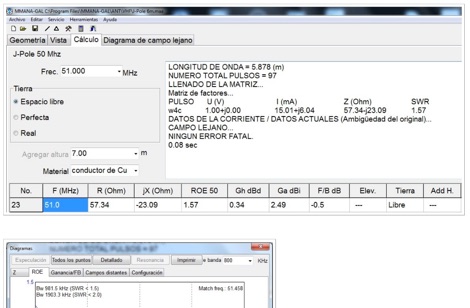 The page provides information on a simple 50MHz J-Pole Antenna project based on the DK7ZB design. It explains the principle of the Wireman-J-Pole, the feeding process, practical mounting, and simulation results using MMANA GAL. The content aims to guide amateur radio operators in building their own J-Pole antennas for the 6-meter band.
 -
 This resource provides a detailed guide on constructing a J-pole antenna specifically for the 2 meter band, which is popular among amateur radio operators. The article outlines the materials needed, including various sizes of aluminum pipes and PVC, as well as the tools required for assembly. It emphasizes the simplicity and effectiveness of the J-pole design, making it an ideal choice for newcomers to amateur radio. The instructions are straightforward, allowing users to build the antenna in less than an hour, and include tips for tuning the antenna for optimal performance. In addition to the construction details, the resource includes practical advice on the assembly process, such as how to cut and join the pipes, as well as how to mount the SO239 connector. The author shares personal experiences and insights on achieving a low standing wave ratio (S.W.R.) and suggests modifications for creating bi-band or tri-band J-pole antennas. This comprehensive guide is enriched with photographs that illustrate the construction steps, making it easier for users to follow along and successfully build their own J-pole antenna.
 -
 A monoband J pole antenna dimensions sheet by N6JSX
 -
 The varieties of twinlead J-Poles and some performance standards, L. B. Cebik, W4RNL
 -
 The Super J Pole antenna is a co-linear vertical consisting of a number of half wave length vertical elements separated with half-wave length stubs (Tuning stub) feed with a folded matching stub by vk6ysf
 -
 4 Element Cubical Quad, Yagis, LZA Circular Quad, Shrunken Quad , quarter wave, J-Pole, beam mounting , changing polarity
 -
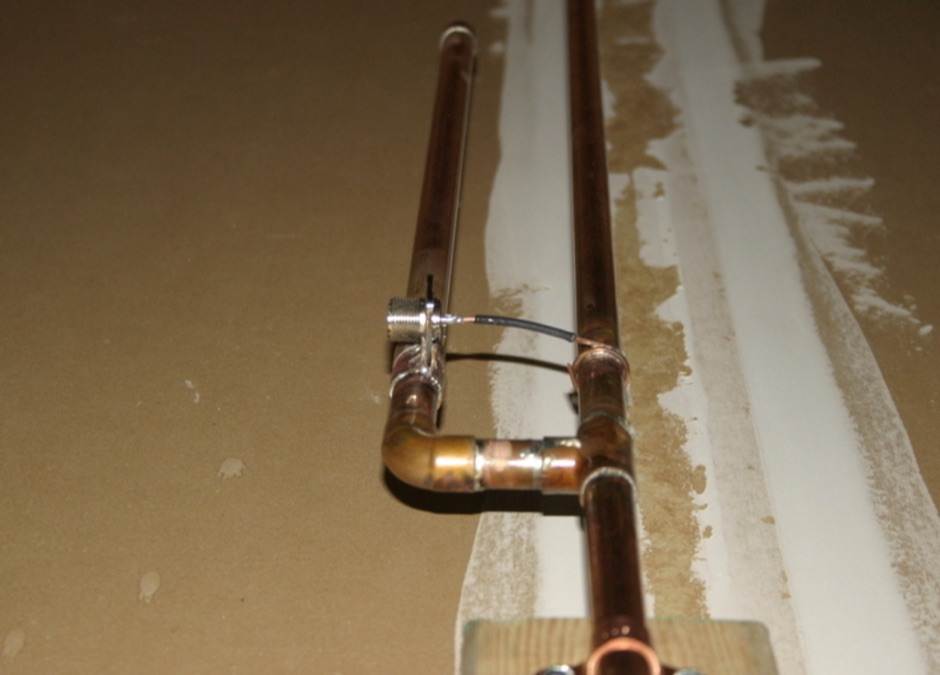 Copper Cactus multiband J-Pole antenna
 -
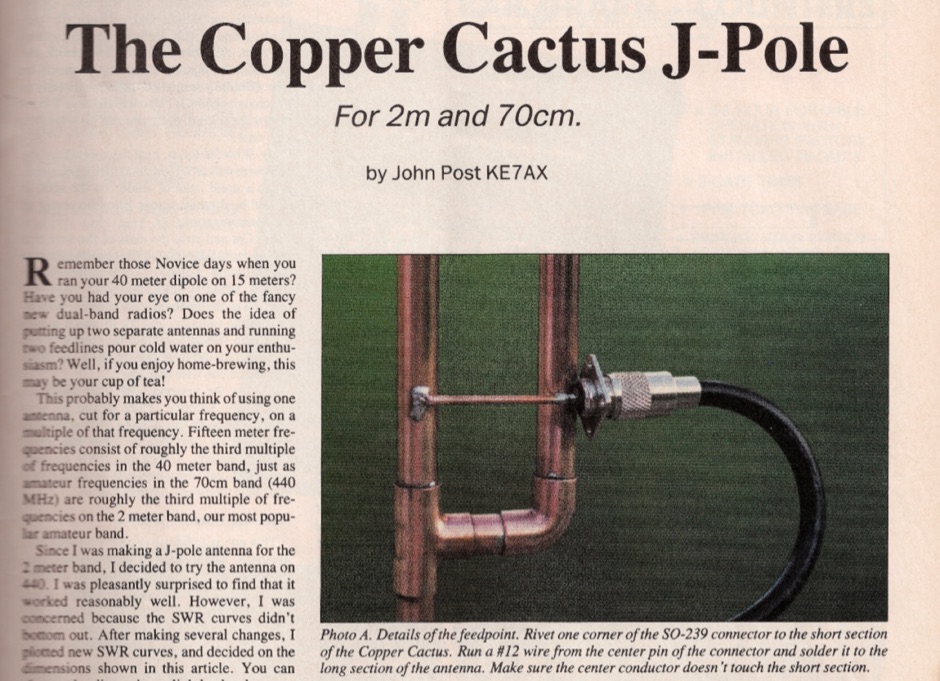 Original article published on February 1992 on 73 Amateur Radio Today about the 2m and 70 cm copper cactus J-pole antenna
 -
 The document is a PDF detailing the construction of the DBJ-1 VHF-UHF Dual Band J-Pole antenna for amateur radio use. It provides instructions on how to build a high-performance dual band base antenna for VHF and UHF bands using a single feed line for less than $10.
 -
 A Portable VHF-UHF Roll-up J-pole Antennam that resonates on both bands but actually performs as a half wave radiator on both bands
 -
 The dynamics of antenna design
 -
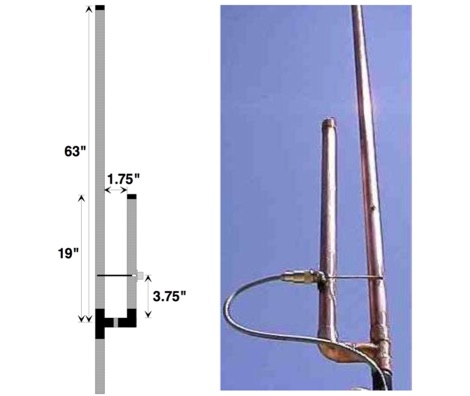 A simple dual band VHF UHF jpole antenna Projects by Dale Kubichek
 -
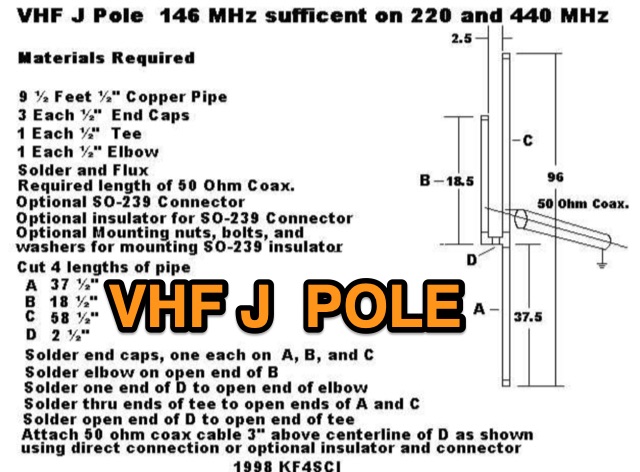 KF4SCI picture of a project for a VHF UHF jpole antenna working on 220 and 440 MHz.
 -
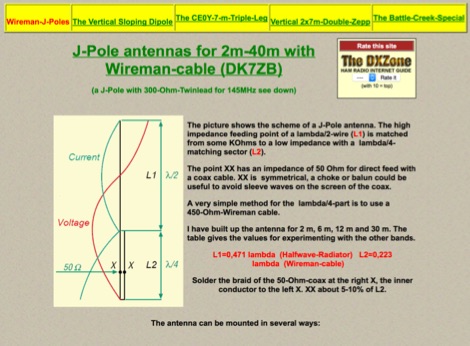 J-Poles with Wireman-cables for the quarterwave matching section, working on VHF and HF bands
 -
 2 meter or Dual Band J-pole bicycle antenna
 -
 jpole 2mtr 70cms homebrew antenna
 -
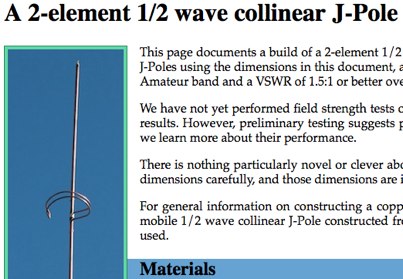 This article document a 2 element half wave collinear J-Pole antenna by KC9EOT and KB8OJH
 -
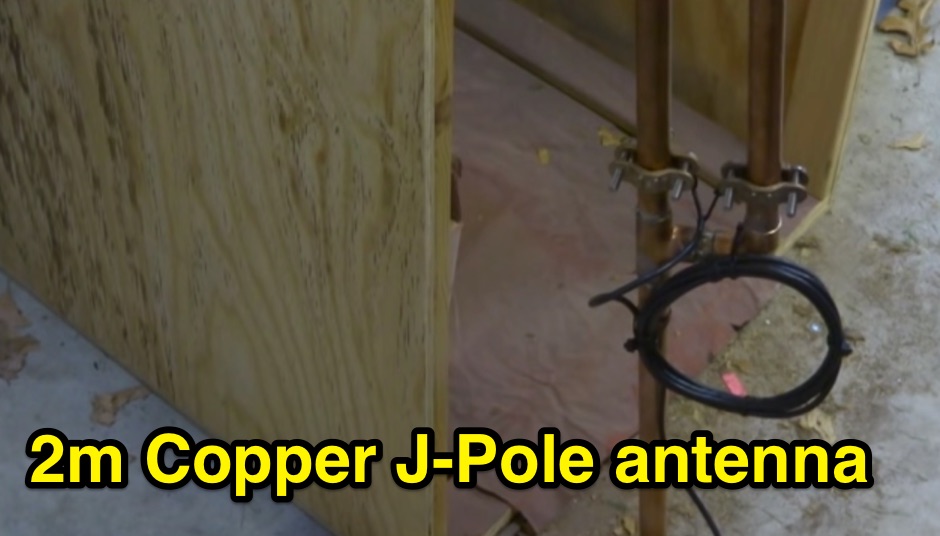 This is the construction of a copper cactus style j-pole antenna.
 -
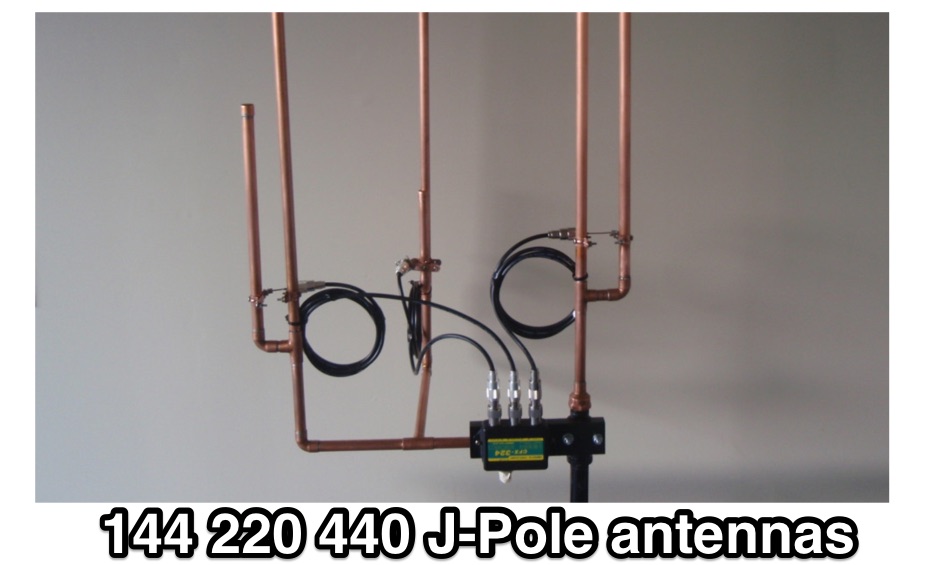 Pictures of a 2 meter, 220, 440 copper J-Pole antennas
 -
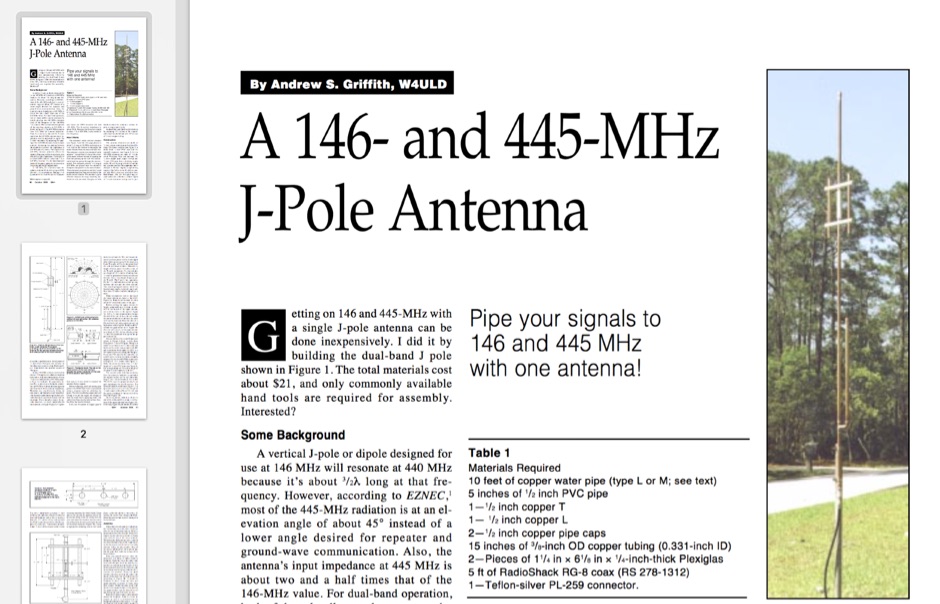 Pipe your signals to 146 and 445 MHz with one antenna!
 -
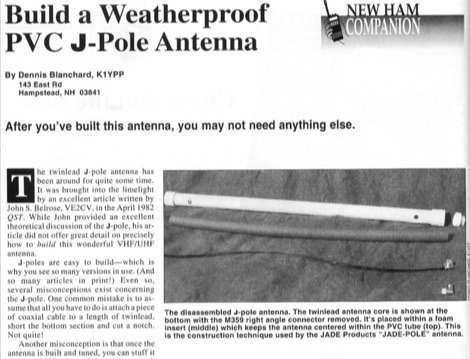 After you have build this antenna, you may not need anything else. This article shows how to build a VHF j-pole antenna and how to protect it by inserting it into a PVC tube, the correct way.
 -
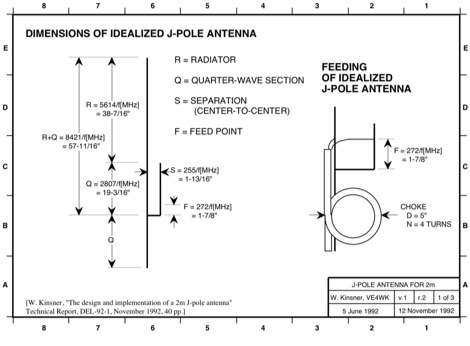 If you like building good antennas, this one is for you. The J-pole is a slim, omnidirectional, half-wave antenna fed at the end through a quarter-wave shorted transmission line. Its predecessor is the famous Zepp antenna developed for the Zeppelin airship.
 -
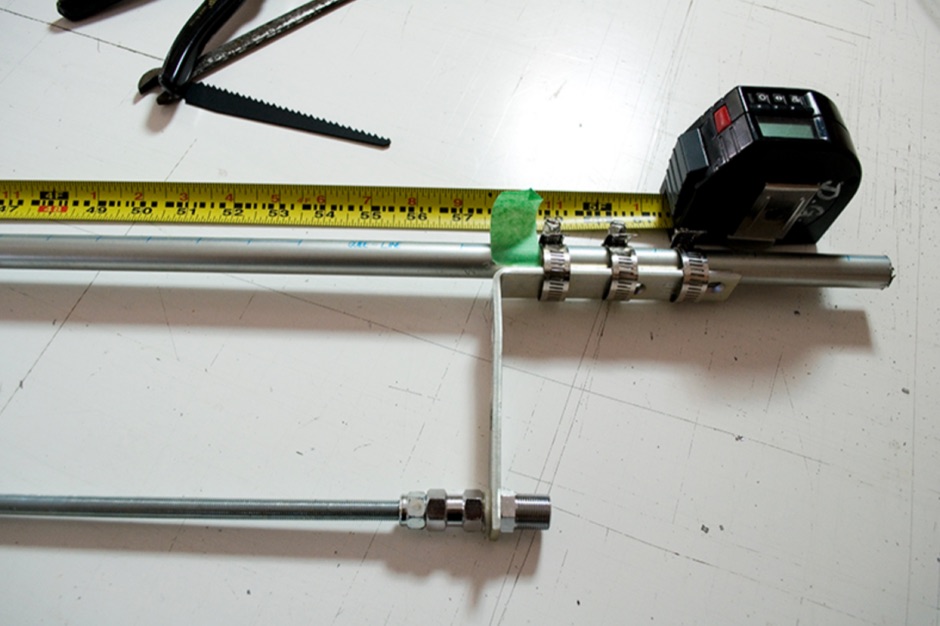 A 2m 70cm Dual Band J-Pole antenna for 35 USD. An excellent performing J-Pole type antenna, constructed from readily available materials.
 -
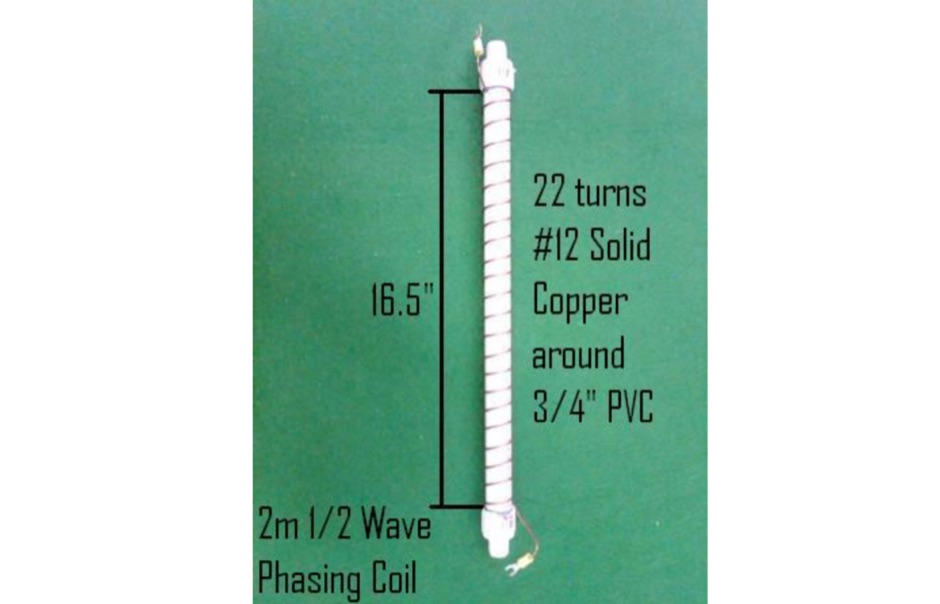
 The collinear J-Pole, often known as the Super-J, does improve the behavior over a regular J-Pole. there is an advantage when vertically combining 1/2 radiating sections to have a bit of separation between the half-wave end points. Get 0.8 dB more gain out of the trusty Super-J by replacing the traditional phasing stub with a long coil.
 -
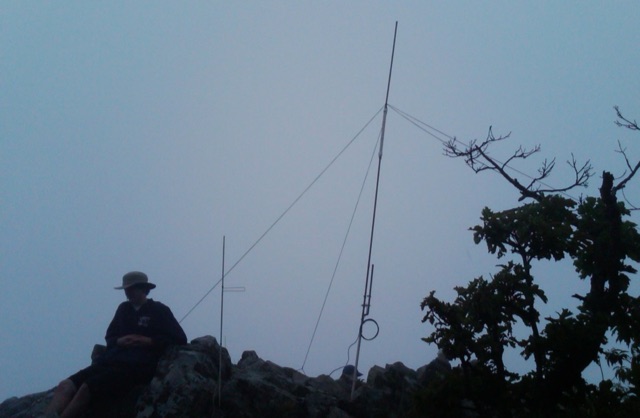
 The collinear J-Pole, often known as the Super-J, does improve the behavior over a regular J-Pole. As many attest, there is an advantage when vertically combining 1/2 radiating sections to have a bit of separation between the half-wave end points. The Super-J has very little separation between the two half-wave radiators.
 -
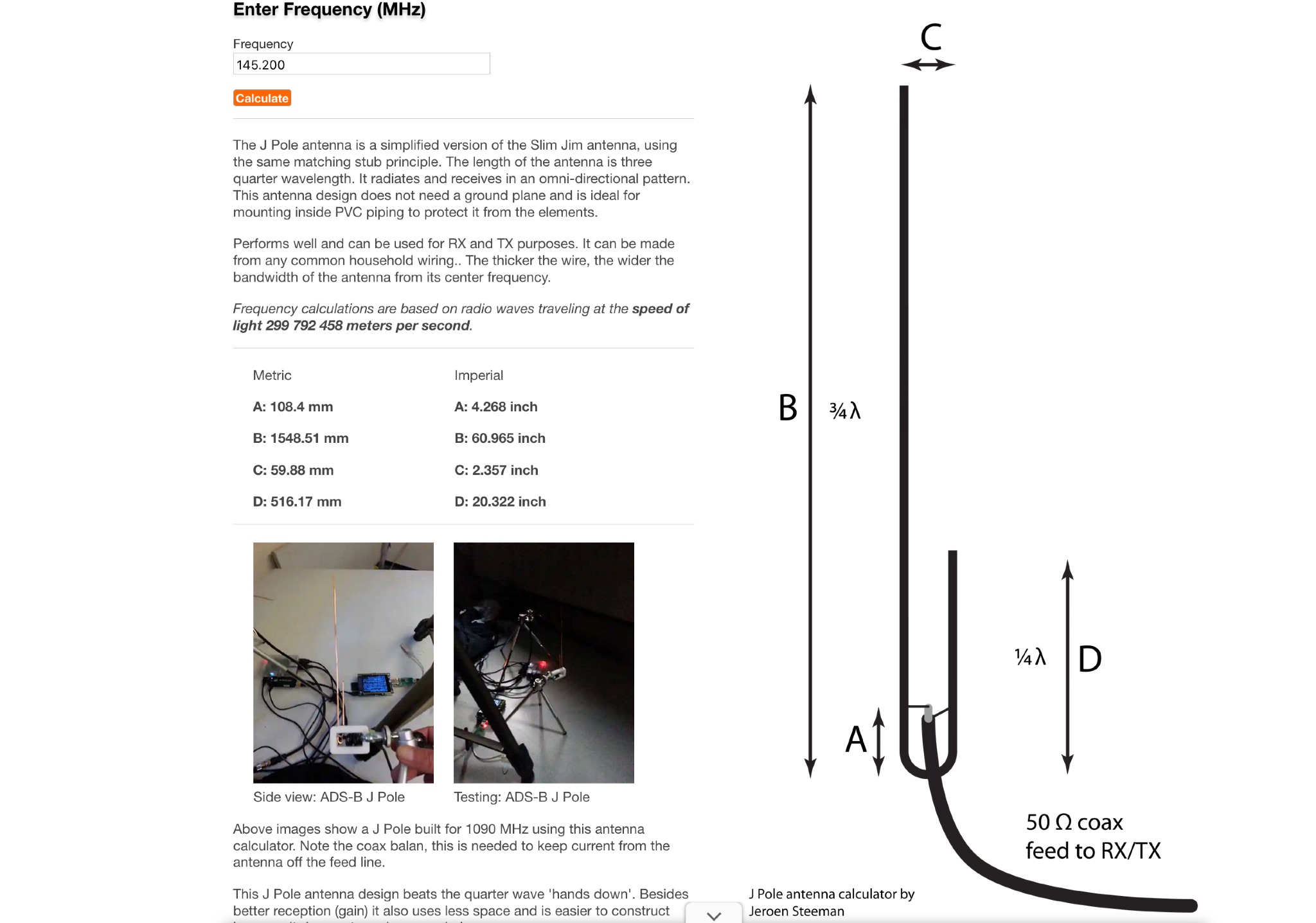 This web page offers an online antenna designer tool for hams to calculate the dimensions needed to construct a J Pole antenna for any desired frequency. The J Pole antenna is a simplified version of the Slim Jim antenna, radiating and receiving signals in an omni-directional pattern. It does not require a ground plane, making it suitable for indoor mounting. With the ability to be made from common household wiring, this antenna performs well for both receiving and transmitting purposes. The calculator is based on radio waves traveling at the speed of light and provides metrics in both imperial and metric units.
 -
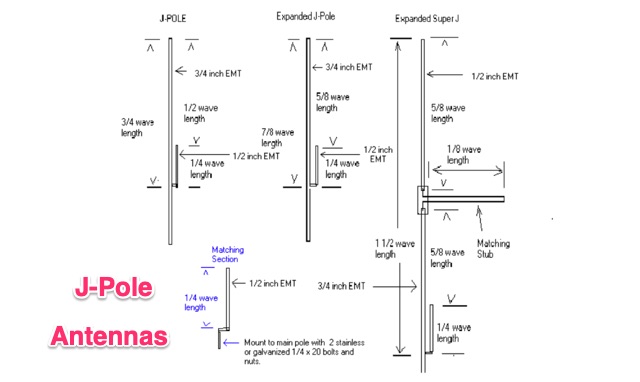 The standard J-Pole antenna is a end fed 1/2 wavelength antenna, in this article is explained also how to build an expanded Super J Pole that provides about 4.5 dbd gain. These antennas can be built from EMT electric conduit pipe
 -
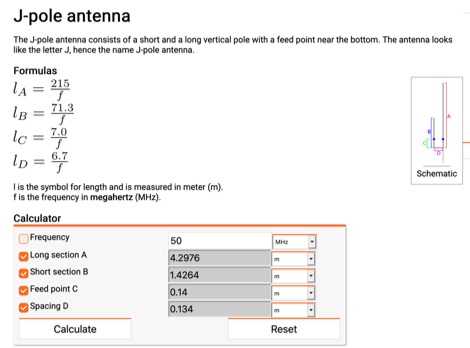 Online calculator for J-Pole antennas. The J-pole antenna consists of a short and a long vertical pole with a feed point near the bottom. The antenna looks like the letter J, hence the name J-pole antenna.
 -
 The J-pole antenna calculator helps users design custom J-pole antennas for specific frequency bands. It provides dimensions for key antenna sections based on the chosen frequency and material’s velocity factor. The calculator also offers insights into J-pole antenna mechanics, velocity factors, and mounting tips, making it ideal for enthusiasts creating antennas for amateur or mobile radio communications.
 -
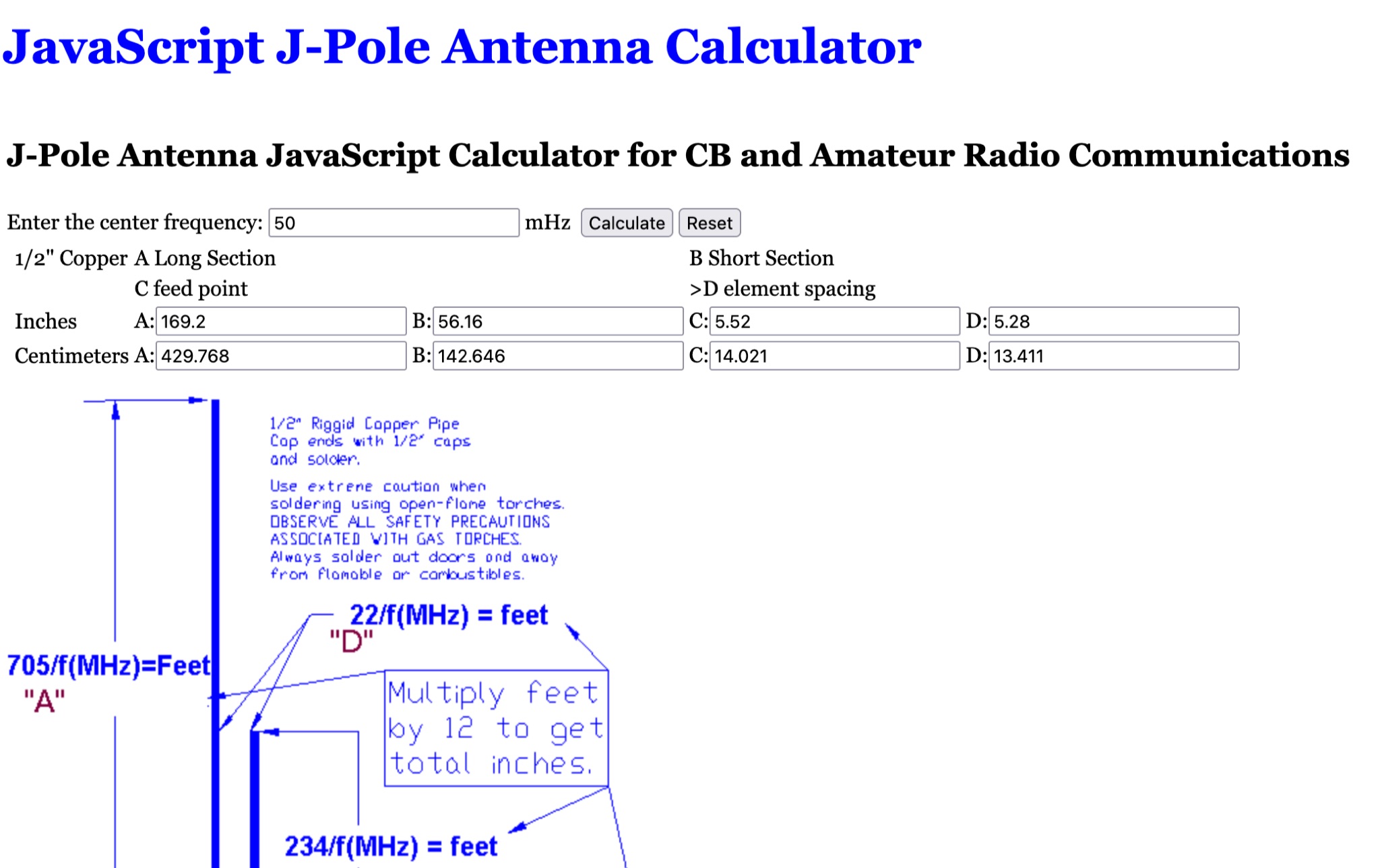 This page provides a detailed guide on the J-pole antenna, an end-fed half-wave antenna matched to the feedline by a quarter-wave transmission line stub. It covers the characteristics, construction materials, feeding options, and mounting considerations for optimal performance. The information is useful for hams or amateur radio operators looking to build and set up a J-pole antenna for improved transmission and reception.
 -
 An easy portable VHF antenna to build for ARES - RACES work is the 300 Ohm Twin Lead JPole antenna
 -
 Using NEC4WIN for Jpole antenna modeling
 -
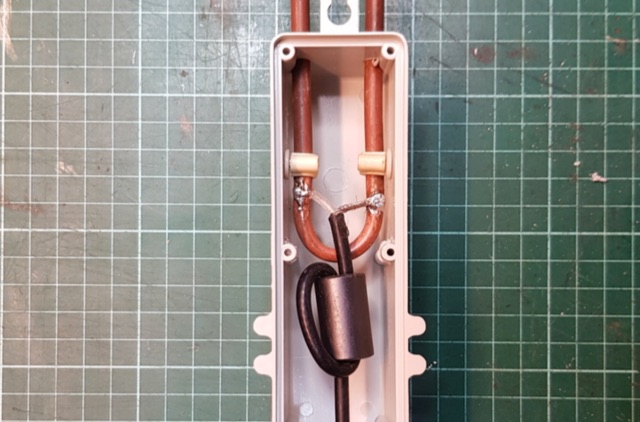 A homemade Jpole antenna for 70 cm band made with 6mm copper pipe
 -
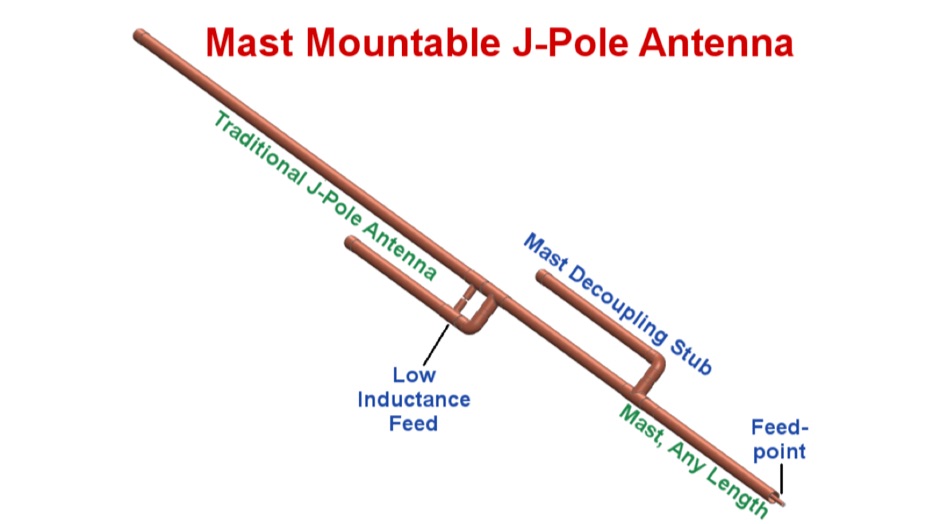 An interesting article on how to make copper cactus J-Pole antennas
 -
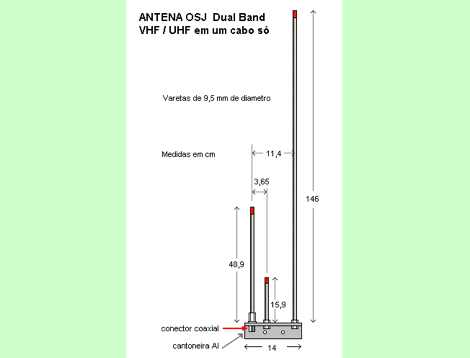 Working priciple of OSJ and jpole anntennas by PY4ZBZ
 -
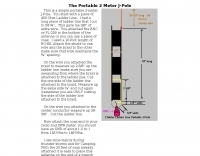 This is a simple portable 2-meter J-Pole antenna. You start with a piece of 450-Ohm Ladder Line
 -
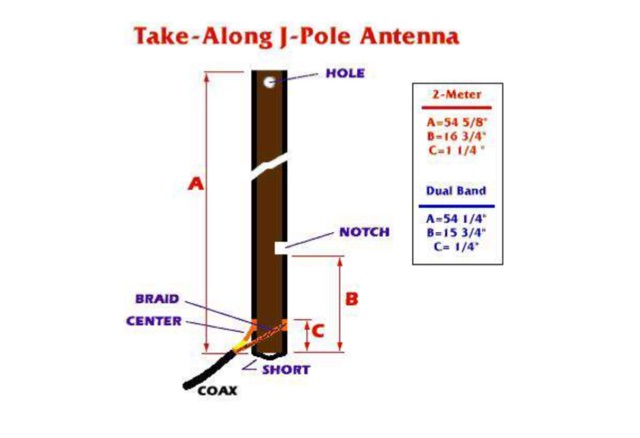 The Pocket Portable J-Pole Antenna, a neat little project that will prove useful for portable operation or improving your HT in the fringe areas.
 -
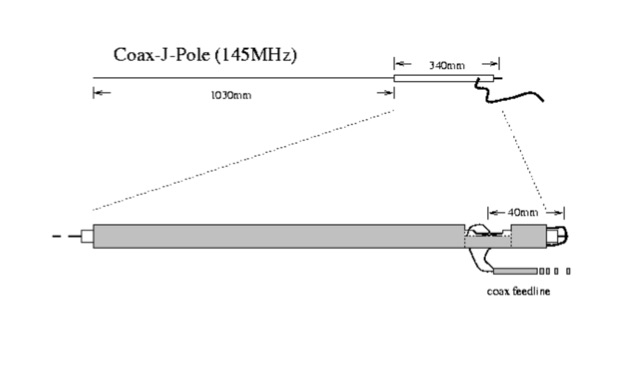 A very essential j-pole antenna for 144 MHz. To adjust the SWR you will have to play with the 40mm distance between the coax feed and the braid inner conductor connection
 -
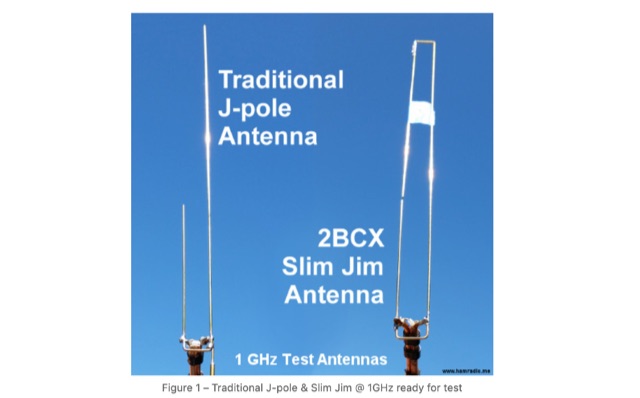 A comparison among a traditional J-Pole Antenna and 2BCX Slim Jim Antenna
 -
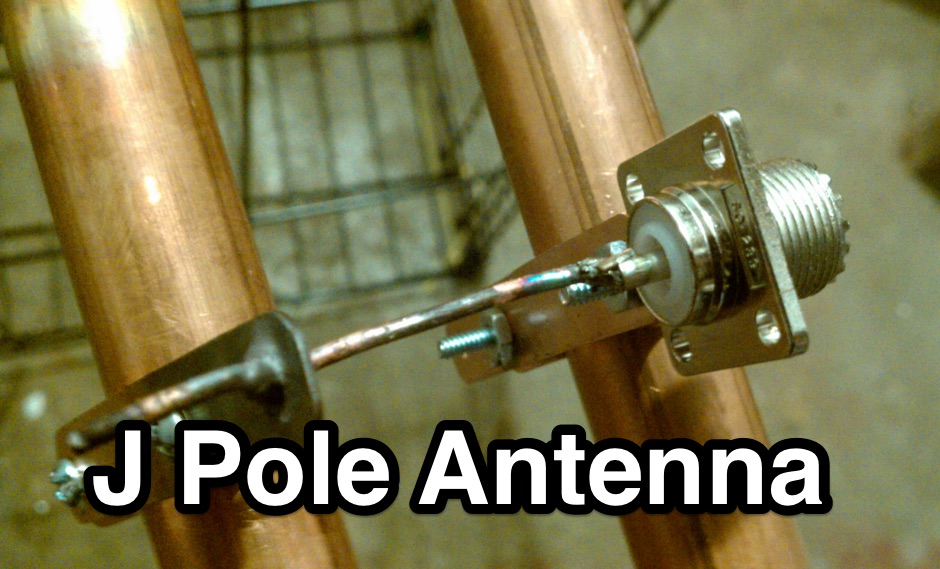 The copper J-Pole antenna soldered in a couple of hours with an interesting method to setup the feeding point
 -
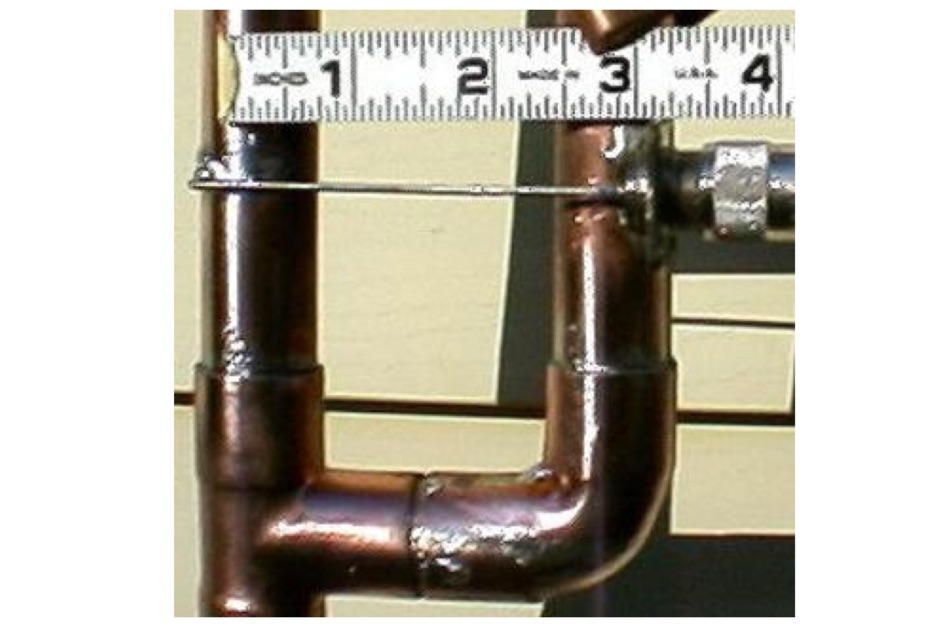 A copper J Antenna for 144 and 430 article with design, feeding methods and pictures
 -
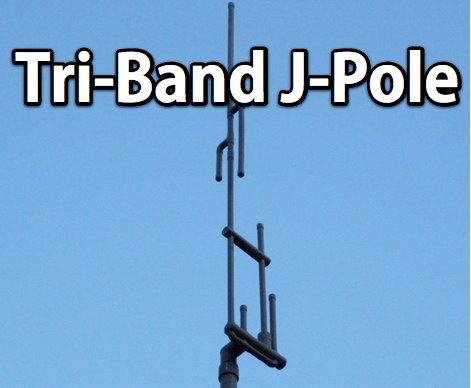 This strange looking antenna is a combination of Coupled-Resonator principle by K9AY and a quarter stubs to achieve low angle radiation pattern. Designed with 4nec2 NEC based antenna modeler and optimizer for 145/220/440MHz bands